


Now that we’re in 2026, many people are taking the time to reflect on what they want to achieve this year. This is where intentional goal setting plays a powerful role. Instead of leaving your plans to chance, goal setting gives you a clear way to decide what matters most and commit to it. When done well, it provides direction, motivation, and a sense of purpose, both personally and professionally.
Effective goal setting helps turn vague aspirations into concrete outcomes you can actually act on. It encourages focus, improves decision-making, and makes progress measurable. Whether you are aiming to advance your career, improve your health, strengthen relationships, or develop new skills, well-defined goals make it easier to stay committed and accountable throughout the year.
In this article, you will learn what goal setting is, why it matters, the different types of goals you can set, and a step-by-step framework to create meaningful goals for 2026. You will also get practical tips to stay on track and a free goal-setting template that you can start using immediately.
What Is Goal Setting
Goal setting is the process of defining specific outcomes you want to achieve and outlining the actions needed to reach them. It provides structure and clarity, helping you focus your efforts, make better choices, and measure progress more effectively.
Key Aspects of Goal Setting
- Clarity: Goals should be clearly defined so you know exactly what you are working towards
- Purpose: Effective goals align with your values and long-term priorities
- Measurability: Clear metrics make it easier to track progress and success
- Realism: Goals should be challenging yet achievable with available resources
- Time-bound focus: Setting deadlines creates urgency and direction
- Commitment: Consistent effort and accountability are essential to achieving goals
Why Is Goal Setting Important
Goal setting is important because it transforms intention into action. By setting clear goals, you give yourself a practical roadmap that guides daily decisions and keeps you focused on what truly matters even when life gets busy.
Creates Accountability
Defined goals make it easier to hold yourself accountable and stay committed over time.
Provides Direction and Focus
Goals act as a guide, helping you prioritise tasks and avoid distractions that do not support your objectives.
Improves Motivation and Discipline
Having clear goals makes it easier to stay motivated, especially during challenging periods, as you understand why the effort is worthwhile.
Encourages Better Decision-Making
When goals are clear, it becomes easier to make choices that align with long-term outcomes rather than short-term convenience.
Enables Progress Tracking
Goals with measurable criteria allow you to assess how far you have come and what still needs improvement.
Builds Confidence and Momentum
Achieving smaller milestones along the way boosts confidence and encourages continued progress.
Supports Personal and Professional Growth
Goal setting encourages continuous improvement, whether you are developing new skills, changing habits, or advancing your career.
Types of Goals
Goals can be grouped into different categories based on key areas of your life. While the SMART framework will be covered in the next section, understanding these categories helps you design a more balanced and meaningful set of goals for 2026.
Personal
Personal goals focus on your lifestyle, habits, and overall life satisfaction. Examples include improving time management, travelling to a new country, establishing a morning routine, or spending more time on hobbies.
Career
Career goals relate to your professional growth and work aspirations. Examples include securing a promotion, transitioning into a new role, expanding professional networks, or leading a major project at work.
Financial
Financial goals centre on managing and growing your money responsibly. Common examples include building an emergency fund, saving for a home, reducing debt, or increasing investments.
Personal Development
Personal development goals focus on self-improvement and upskilling. This includes learning new skills, gaining certifications, or expanding industry knowledge.
For those looking to upskill, SMU Academy offers courses in popular fields such as AI, business analytics, business management, IT, and more. These programmes support individuals who want to stay relevant and competitive while working towards long-term career goals.
Health and Fitness
Health goals aim to improve physical and mental wellbeing. Examples include exercising regularly, improving sleep quality, maintaining a balanced diet, or managing stress more effectively.
Relationship and Social
Relationship goals focus on strengthening personal and professional connections. Examples include spending more quality time with family, improving communication, building friendships, or expanding professional relationships.
7 Steps to Goal Setting
Effective goal setting involves thoughtful planning, realistic assessment, and deliberate follow-through. By breaking the process into clear steps, you can move from broad intentions to actionable plans that are easier to start, commit to and sustain.
The steps below provide a structured framework to help you set meaningful goals for 2026 and increase your chances of long-term success.
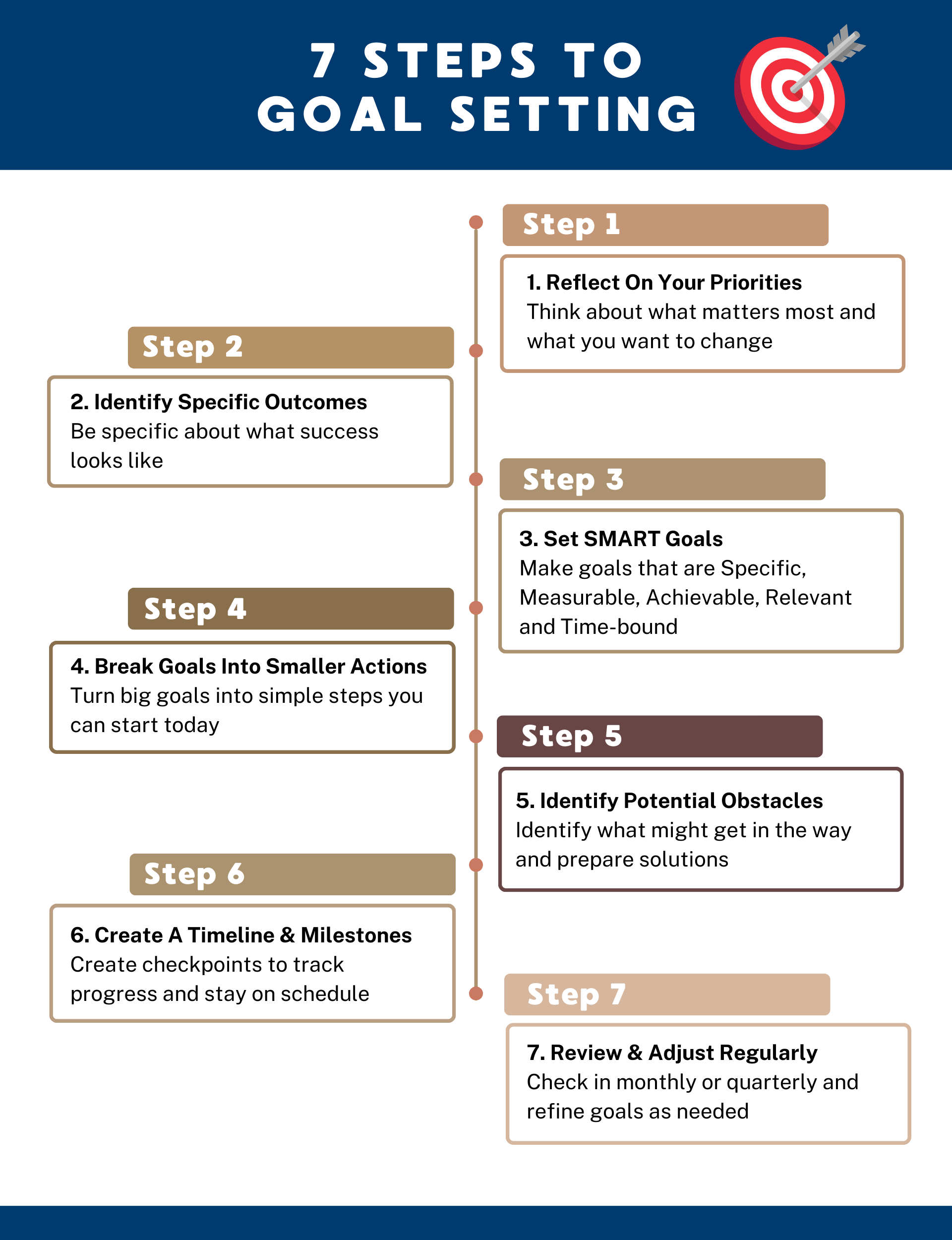
1. Reflect On Your Priorities
Before setting any goals, take time to reflect on your current situation and priorities. Consider what worked well in the past year, what did not, and where you would like to see change.
This reflection helps ensure that your goals are aligned with what truly matters to you, rather than being driven by external pressure, comparison with others, or short-term trends.
2. Identify Specific Outcomes
Once your priorities are clear, define what success looks like in concrete terms. Avoid broad or abstract statements and focus instead on specific outcomes you want to achieve. Clear outcomes make your goals easier to visualise and provide a stronger sense of direction when planning your next steps.
3. Set SMART Goals
To increase clarity and accountability, goals should follow the SMART framework:
- Specific: Clearly define what you want to achieve
Example: Instead of “improve my skills,” specify “learn data analysis using Python. - Measurable: Include criteria to track progress and success
Example: “Complete three Python projects” or “pass a certification assessment.” - Achievable: Ensure the goal is realistic given your time, resources, and current skill level
Example: Learning Python within six months while working full-time may be achievable, whereas mastering multiple programming languages simultaneously may not be. - Relevant: The goal should align with your broader personal or professional objectives
Example: Learning data analysis is relevant if you aim to move into a more analytical or data-driven role. - Time-bound: Set a clear deadline to create urgency and structure
Example: “By September 2026.”
Putting it all together, a SMART goal may look like this:
“I will complete a beginner-to-intermediate Python data analysis course and finish three hands-on projects by September 2026 to support my transition into a data-focused role.”
4. Break Goals into Smaller Actions
Large goals can feel overwhelming if tackled all at once. Breaking them down into smaller, manageable actions makes them easier to start and sustain. These smaller steps also create regular opportunities for progress, helping you stay motivated and giving you quick wins along the way.
5. Identify Potential Obstacles
Anticipating challenges in advance allows you to prepare realistic solutions. Common obstacles may include time constraints, lack of motivation, or competing priorities. By identifying these early, you can plan strategies to minimise disruptions, such as scheduling dedicated time blocks or seeking support.
6. Create A Timeline and Milestones
Assign timelines to both your overall goal and the smaller actions within it. Milestones act as checkpoints that help you assess progress and make adjustments if needed. This structured timeline prevents procrastination and keeps your efforts focused throughout the year.
7. Review and Adjust Regularly
Regular monthly or quarterly reviews help you stay aligned with changing circumstances and priorities. Adjusting your goals when necessary is not a failure; it is a practical way to ensure they remain relevant and achievable as you progress through 2026.
Free Goal Setting Template
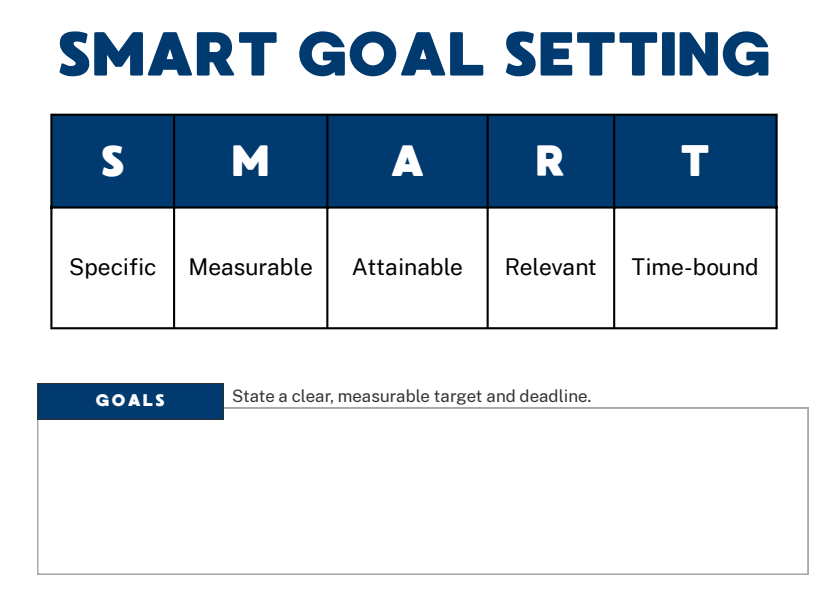
Tracking progress is just as important as setting goals. A structured template helps you stay organised, accountable, and focused on consistent improvement. Below is a free goal-setting template you can use to plan, track, and review your goals for 2026, so you do not have to start from a blank page.
Tips to Stay On Track of Your Goals
Staying consistent is often the most challenging part of goal setting. The following tips can help you maintain focus and motivation throughout the year:
- Review your goals weekly or monthly to stay aligned
- Celebrate small wins to maintain motivation
- Build habits that support your goals
- Use reminders or trackers to monitor progress
- Seek accountability from a mentor, friend, or colleague
- Be flexible and adjust goals when circumstances change
Goal Setting for Long-Term Success in 2026
Goal setting is a continuous process of growth, reflection, and improvement. By setting clear, structured goals, you create a sense of direction that supports both personal fulfilment and professional success. Effective goal setting encourages accountability, builds confidence, and helps you stay focused even when challenges arise.
As you plan for 2026, aim for balance across different areas of your life. Combine ambition with realism, and remember that progress is often built through small, consistent actions. Reviewing and refining your goals regularly ensures they remain aligned with your evolving priorities.
If personal development and upskilling are part of your 2026 goals, explore SMU Academy’s professional courses to support your learning and career growth, and to turn your goals into concrete, future-ready capabilities.