


E-commerce, short for electronic commerce, refers to the buying and selling of goods and services over the internet through marketplaces, websites, mobile applications, and social media platforms. As digital technologies continue to evolve, the scale and sophistication of online commerce have expanded significantly across industries.
According to research by Forbes, e-commerce is projected to account for 22.5% of global retail sales by 2028. Singapore’s e-commerce market has also grown steadily. In 2025, the annual gross merchandise volume (GMV) of the e-commerce market reached approximately US$9 billion and is projected to rise to US$15 billion by 2030. This growth presents significant opportunities for businesses to expand their digital presence and remain competitive in an increasingly online-driven marketplace.
This article examines major e-commerce trends in Singapore, leading marketplaces, consumer purchasing behaviour and cross-border opportunities shaping the sector.
Key Takeaways
- E-commerce continues to grow rapidly in Singapore and globally as consumers increasingly shift toward online shopping.
- Understanding consumer preferences and emerging trends can help businesses remain competitive and identify new growth opportunities.
- Top e-commerce marketplaces differentiate themselves through competitive pricing, broad product selections, interactive shopping features, and personalised experiences.
- Businesses can develop practical e-commerce capabilities through industry training programmes and government-supported upskilling initiatives.
What are the E-commerce Trends in 2026?
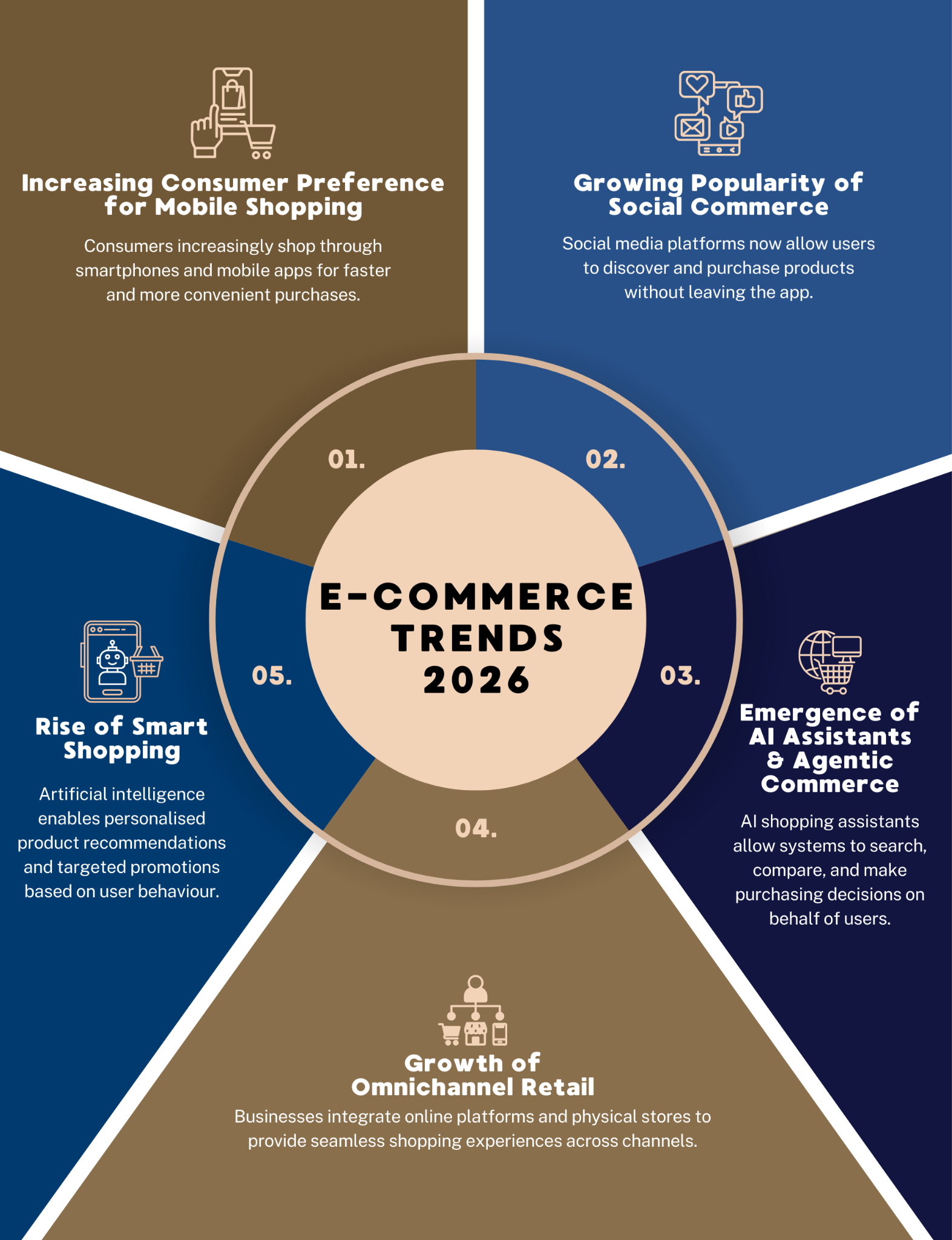
The e-commerce landscape continues to evolve quickly as new technologies, changing consumer behaviours, and digital platforms reshape how people shop online. The following trends highlight some of the major developments shaping e-commerce in 2026.
Increasing Consumer Preference for Mobile Shopping
Mobile commerce continues to grow as more consumers shop through smartphones and mobile applications. These platforms make it easier to browse products, receive personalised recommendations, and get push notifications about deals or promotions.
In Singapore, while desktops remain the primary channel for online shopping, mobile devices account for a substantial share of e-commerce transactions. Data from leading retail platforms shows that mobile visits are at least half the volume of desktop visits. Within mobile commerce, consumers also show a clear preference for app-based shopping over mobile web browsers.
For businesses, this shift highlights the importance of designing mobile-friendly storefronts, optimising checkout processes and ensuring seamless user experiences across devices.
Courses such as E-commerce Ecosystem Effective Design and Digital Merchandising examine how visual presentation, product layout and user experience influence conversion rates.
Growing Popularity of Social Commerce
Social commerce refers to shopping that takes place directly within social media platforms, allowing users to discover and make purchases without leaving the platform. This approach combines product discovery and transactions all in one place, creating a more seamless buying journey.
As platforms such as Instagram, TikTok and Facebook continue to expand their in-app shopping features, businesses can engage consumers through interactive content, live features, influencer collaborations and integrated product listings. This shortens the journey from product discovery to purchase and strengthens the role of social media in the e-commerce ecosystem.
Relevant training programmes, including E-commerce Ecosystem Content and Social Media Marketing Strategies for Business Growth, examine how businesses can use effective content and social media strategies to support digital commerce initiatives.
Rise of Smart Shopping with AI Personalisation
Artificial intelligence (AI) is reshaping e-commerce by enabling more personalised shopping experiences. It can be used to recommend products, tailor promotions, and adjust content based on customer behaviour and preferences.
As AI adoption grows, businesses require stronger capabilities in analysing customer data and applying personalisation strategies. Organisations that can translate insights into relevant experiences are better positioned to stay competitive in digital commerce.
Programmes such as the Advanced Certificate in Artificial Intelligence in the Digital Economy examine how AI can be applied to analyse customer data, enable personalised experiences and support more effective decision-making in digital commerce.
Emergence of AI Assistants and Agentic Commerce
AI shopping assistants are becoming an important trend in e-commerce, as they take a more active role in supporting purchasing decisions. Unlike personalisation tools that refine recommendations, these systems are designed to perform tasks on behalf of the user.
For example, AI assistants can identify suitable products based on user needs, track price changes across platforms, and simplify parts of the purchasing process. This reduces the need for manual searching and comparison, particularly in categories with high product variety or price fluctuations.
Growth of Omnichannel Retail
Omnichannel retail refers to a strategy where organisations integrate both online and offline channels to provide a seamless shopping experience. By connecting physical stores, e-commerce platforms and digital touchpoints, businesses can engage customers across multiple channels and support more flexible purchasing journeys.
As organisations expand their presence across various channels, they must coordinate inventory, pricing, logistics, and customer experience to ensure consistency across every touchpoint. Developing the ability to manage these interconnected ecosystems has therefore become an important capability for modern retail teams.
Programmes such as the E-commerce Ecosystem Key Account Management for Omni-channel Business examine how businesses can develop effective omnichannel strategies while managing partnerships across multiple sales channels.
Top E-commerce Marketplaces in Singapore
The following table provides an overview of the leading e-commerce marketplaces in Singapore based on their average monthly website visits, highlighting their relative scale and key factors driving their popularity.
| Marketplace | Average Monthly Visits (as of December 2025) | Key Success Factors |
| Shopee | Over 9 million visits |
|
| Lazada | Over 5 million visits |
|
| Amazon | Over 4 million visits |
|
| AliExpress | Nearly 3 million visits |
|
Source: Statista
Key Consumer Preferences in Online Shopping

Mobile-First Shopping Behaviour
Mobile devices play a central role in online shopping. Many consumers browse, compare products and complete purchases through smartphones. As a result, mobile-friendly websites, apps and simplified checkout processes have become essential for e-commerce platforms.
Preference for Quality Over Price
Consumers in Singapore tend to value product quality and brand reputation more than price alone. Businesses that demonstrate reliability and strong customer experience may be better positioned to attract and retain customers.
Influence of Social Proof
Product reviews, ratings, and recommendations strongly influence purchasing decisions. Consumers frequently rely on feedback from other buyers or content shared on social media platforms to evaluate products before making a purchase.
Preference for Personalised Shopping Experiences
Personalisation increasingly shapes online retail experiences. By analysing browsing behaviour and purchase history, businesses can deliver tailored product recommendations and promotions that make online shopping more relevant and engaging for customers.
Cross-Border E-commerce Opportunities in Singapore
Singapore provides a favourable environment for cross-border e-commerce due to its strong connectivity, advanced infrastructure, and open trade policies. As a result, businesses operating in Singapore are well-positioned to access both regional and global markets efficiently.
- Access to a high-value consumer market: Singapore’s strong purchasing power and demand for international products create opportunities for both local and overseas sellers.
- Established e-commerce ecosystem: Presence of major regional and global marketplaces allows businesses to access large online customer bases and scale cross-border operations.
- Advanced digital infrastructure: Reliable payment systems and logistics networks support cross-border transactions, enabling smoother fulfilment, multi-currency payments, and secure online purchases
- Trust-driven market environment: Strong regulatory standards and consumer protection frameworks enhance confidence in cross-border transactions.
Programmes such as the E-Commerce Ecosystem Cross Border Fulfillment Solutions within Southeast Asia focus on how businesses can manage international logistics and supply chains when operating across multiple markets.
The Next Phase of E-commerce in Singapore
E-commerce in Singapore continues to evolve as digital technologies, consumer expectations and regional trade reshape the retail landscape. In response, businesses are adopting omnichannel strategies, data analytics and cross-border logistics to improve efficiency and customer experience.
As the sector develops, understanding emerging market trends and operational capabilities will remain important for organisations adapting to digital retail environments.
To support professionals in building these capabilities, SMU Academy offers E-commerce programmes that examine digital commerce strategy, cross-border operations and evolving consumer trends.
FAQs About E-commerce in Singapore
How to start an e-commerce business in Singapore?
Starting an e-commerce business in Singapore typically involves registering a company with the Accounting and Corporate Regulatory Authority (ACRA) and setting up an online store. Businesses must also develop digital marketing strategies and monitor sales and customer data to improve operations over time.
Which is the best e-commerce platform in Singapore?
There is no single best e-commerce platform in Singapore, as the right choice depends on a business’s goals, target audience and budget. Popular options include Shopee, Lazada and Amazon Singapore for marketplace selling, while Shopify and WooCommerce are commonly used by businesses that want to build their own online stores.
Which e-commerce platform should I choose for my business?
The most suitable e-commerce platform depends on your business model, target audience and operational needs. Key considerations include pricing, platform features, scalability and integration with payment or logistics systems.
What are the 4 types of e-commerce?
The most common models are Business-to-Consumer (B2C), Business-to-Business (B2B), Consumer-to-Consumer (C2C) and Consumer-to-Business (C2B).
- Business-to-Consumer (B2C): Businesses sell products or services directly to individual consumers through online stores or marketplaces
- Business-to-Business (B2B): Companies sell goods or services to other businesses, often through bulk transactions or long-term partnerships
- Consumer-to-Consumer (C2C): Individuals sell products or services directly to other individuals through online platforms or marketplaces
- Consumer-to-Business (C2B): Individuals provide products or services to companies, such as freelance work or specialised services