

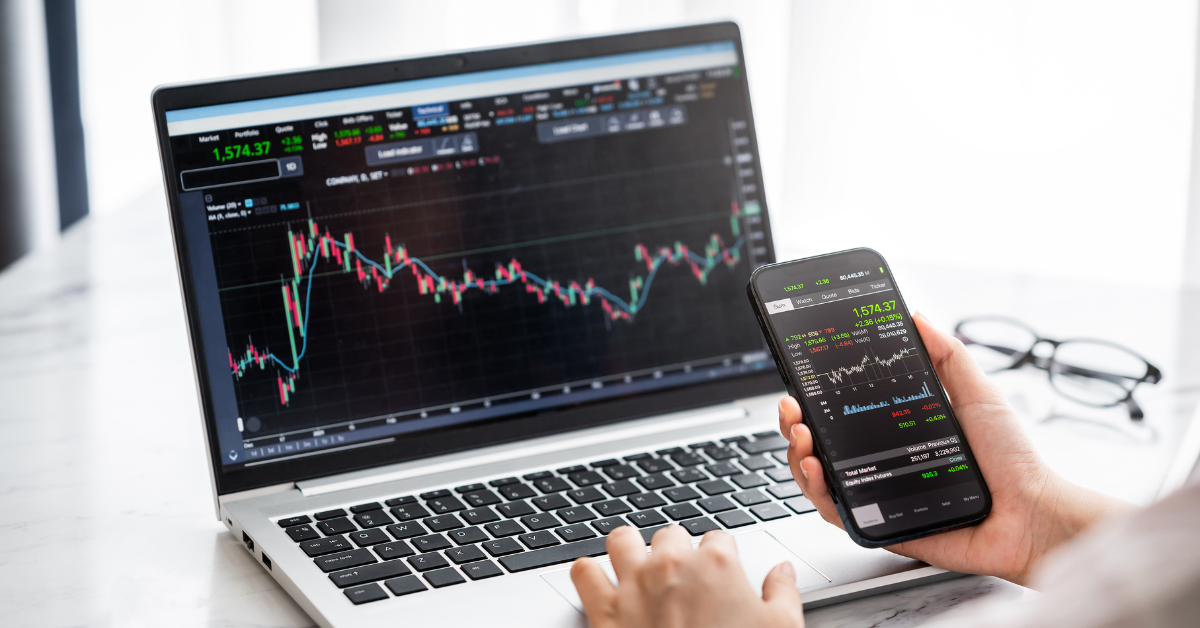
Trading involves buying and selling financial instruments with the aim of profiting from price movements over time. Unlike long-term investing, trading typically focuses on shorter time horizons and more active decision-making. It appeals to many beginners because of its flexibility, accessibility, and the opportunity to participate directly in global financial markets.
However, trading is not without risk. While the potential rewards can be attractive, losses can occur just as quickly without the right knowledge, discipline, and risk management. Successful trading requires an understanding of how markets work, choosing suitable instruments, and adopting a strategy that aligns with your goals and risk tolerance.
This guide explains the fundamentals of trading, introduces key markets and trading styles, and outlines practical steps on how to start trading responsibly. It also highlights common mistakes beginners make and answers frequently asked questions to help you build a strong foundation before you begin.
The information provided in this article is for general informational purposes only and does not constitute professional advice. Readers are encouraged to consider their personal circumstances and consult with a qualified professional before making any decisions.
What Is Trading and How Do Trading Markets Work
Trading is the act of buying and selling financial assets to profit from changes in market prices. Trades are executed through regulated exchanges or platforms where buyers and sellers interact based on supply and demand dynamics.
Key components and mechanisms in trading include:
- Financial instruments: Assets such as shares, currencies, or commodities that are bought and sold in markets
- Buy and sell orders: Instructions placed with a broker to enter or exit trades at specific prices
- Market prices: Prices fluctuate constantly based on supply, demand, and market sentiment
- Liquidity: Refers to how easily an asset can be bought or sold without affecting its price significantly
- Volatility: Measures how much prices move over a given period, influencing both risk and opportunity
- Trading platforms and brokers: Technology and intermediaries that facilitate market access and trade execution
Key Markets for Trading
Financial markets provide different ways for traders to participate in price movements across asset classes. Each market has its own characteristics, risk profile, and learning curve, which makes understanding their pros and cons essential before choosing where to trade.
Commodities
Commodities include physical goods such as gold, oil, and agricultural products traded on global markets.
Cryptocurrency
Cryptocurrency trading involves digital assets such as Bitcoin and Ethereum, often traded on online exchanges.
Derivatives
Derivatives such as Contract for Differences (CFDs) or futures derive value from underlying assets like stocks or commodities.
Forex (Foreign Exchange)
Forex trading focuses on buying and selling currency pairs based on exchange rate movements.
Indices
Index trading tracks the performance of a group of stocks representing a market or sector, such as the FTSE or S&P 500.
Stocks
Stock trading involves buying and selling shares of publicly listed companies on stock exchanges.
Choosing the Right Market to Trade

Choosing a trading market should be a deliberate decision based on personal circumstances, knowledge level, and risk appetite. The right market aligns with both your financial goals and your ability to manage uncertainty.
Capital Requirements
Some markets require more starting capital to manage risk effectively. For example, stock trading may require higher capital to diversify, while forex and CFDs allow smaller position sizes but involve leverage.
Complexity and Learning Curve
Markets such as derivatives and leveraged products involve advanced concepts like margin and overnight financing. Beginners may find stocks or indices easier to understand initially.
Liquidity and Execution
Highly liquid markets such as forex and major indices allow trades to be executed quickly at predictable prices, reducing slippage and transaction costs.
Market Hours and Lifestyle Fit
Forex and crypto markets operate beyond traditional business hours, which may suit those trading part-time. Stock markets, however, follow fixed exchange hours that may limit flexibility.
Personal Interest and Objectives
Traders often perform better when trading markets they are genuinely interested in and willing to study consistently.
Risk Tolerance
Different markets carry different levels of volatility. High-volatility markets such as cryptocurrencies and certain forex pairs can experience sharp price swings within minutes, which may suit risk-tolerant traders but overwhelm beginners. Lower-volatility markets like indices or large-cap stocks may offer a more stable learning environment.
Different Trading Styles
Trading styles differ based on how often trades are placed and how long positions are held. Selecting a style that matches your schedule, temperament, and experience level is just as important as choosing a market.
Algorithmic or Systematic Trading
This style uses predefined rules or algorithms to execute trades automatically. It appeals to traders with technical or programming skills and reduces emotional decision-making.
Day Trading
Day traders open and close positions within the same trading day, avoiding overnight risk. This style requires constant market monitoring, quick decision-making, and strong emotional discipline. It suits full-time traders or those with dedicated screen time.
Position Trading
Position trading focuses on long-term trends and fundamentals, with trades held for months or longer. It suits traders with patience who prefer fewer trades and lower stress levels.
Scalping
Scalping involves making numerous small trades to profit from minor price fluctuations. It demands fast execution, low trading costs, and strict discipline, making it less suitable for beginners.
Swing Trading
Swing traders hold positions for several days or weeks, aiming to capture medium-term price trends. This approach relies on technical analysis and offers more flexibility, making it popular among part-time traders.
How to Start Trading
Starting trading effectively requires a structured and disciplined approach. Following clear steps helps beginners build skills while limiting unnecessary risk.
Step 1: Practice Before Investing Real Money
Begin with demo or paper trading accounts that simulate real market conditions without financial risk. This allows you to test strategies, learn how platforms work, and experience market volatility safely.
Step 2: Learn the Fundamentals
Understand basic trading concepts such as order types, charts, indicators, and risk management. Familiarise yourself with common terms before placing real trades.
Step 3: Set Realistic Goals
Effective goal setting helps define what you want to achieve through trading, whether it is building skills, generating supplementary income, or improving market understanding. Setting clear, realistic goals also helps manage expectations, measure progress, and avoid unnecessary risk-taking driven by short-term results.
Step 4: Choose a Regulated Broker
Select a broker regulated by recognised authorities, offering transparent fees, user-friendly platforms, and adequate educational tools.
Step 5: Develop a Trading Plan
Create clear rules for entering and exiting trades, setting stop-loss levels, and managing position sizes. A written plan helps remove emotional decision-making.
Step 6: Attend Courses
Structured courses help beginners build a solid understanding of markets, trading strategies, and risk management in a more efficient and guided way. SMU Academy offers a range of professional programmes aligned with specific asset classes and trading objectives:
- Certificate in Value Investing: Investing in Stocks and Bonds: Teaches how to evaluate stocks and bonds using fundamental and valuation-based approaches
- Executive Certificate in Foreign Exchange Management: Covers currency market dynamics, forex trading, and exchange rate risk management
- Trading and Risk Management of Bulk Commodities: Focuses on pricing, trading, and risk considerations in major bulk commodity markets
- An Insight into Commodity Trading Firms from a Financing Perspective: Explains how futures and options are used to manage commodity price volatility
Step 7: Start Small and Review Regularly
Begin with small trade sizes, track your results, and review both winning and losing trades to identify patterns and areas for improvement.
Common Mistakes Beginners Make When Trading
Many beginners struggle not because trading is impossible, but because they overlook discipline, preparation, and emotional control. Understanding common pitfalls and how to address them can significantly improve long-term outcomes.
- Trading without a plan: Leads to inconsistent decisions and poor risk control
- Overtrading: Excessive trades increase costs and emotional fatigue
- Ignoring risk management: Large losses can quickly wipe out trading capital
- Chasing losses: Emotional trading often worsens losses instead of recovering them
- Relying on tips: Following unverified advice undermines independent decision-making
How to Start Trading With Confidence and Discipline
Learning how to start trading is a gradual process that combines education, practice, and self-discipline. By understanding how markets work, choosing suitable instruments, adopting an appropriate trading style, and managing risk carefully, beginners can approach trading more confidently and responsibly. While trading offers opportunities for growth and skill development, success depends on preparation rather than speed. Taking the time to learn, practise, and reflect on performance can make a meaningful difference over the long term.
If you are considering starting your trading journey, explore SMU Academy’s professional courses to build a strong foundation and practical trading skills.
FAQs About Trading
What is the minimum age for trading?
The minimum age typically depends on local regulations and brokerage requirements, but it is commonly 18 years old.
What is the difference between investing and trading?
Investing focuses on long-term wealth accumulation through holding assets over extended periods, while trading seeks to profit from shorter-term price movements. Trading requires more active management and decision-making.
How do you manage risk when trading?
Risk management involves setting stop-loss orders, limiting position sizes, diversifying trades, and maintaining strict discipline. Successful traders prioritise capital protection over profit.
What is the golden rule of trading?
The golden rule of trading is to protect your capital first. Never risk more than you can afford to lose, and ensure every trade has a defined risk-reward balance.