


Artificial Intelligence (AI) adoption in organisations has grown rapidly in recent years. According to McKinsey’s Global Survey on AI, around 55% of organisations report using AI tools for businesses across at least one function, reflecting its expanding role in improving productivity and decision-making.
AI tools are software applications that use technologies such as machine learning, natural language processing, and generative AI. They are designed to support business operations by processing information, generating outputs, and assisting with a wide range of work tasks across organisations.
This article outlines the main types of AI tools used in business and explains why organisations are adopting them, as well as how they can choose the right AI tools for their business.
Key Takeaways
- AI tools for business support a wide range of functions, including content creation, data analysis, workflow automation, and customer service.
- Organisations typically deploy multiple AI tools across departments rather than relying on a single platform.
- AI tools deliver value when organisations align them with clear business use cases, integrate them into existing systems, and build internal capabilities.
What Types of AI Tools Do Businesses Use?
AI tools support a wide range of business functions. Most organisations deploy several categories of tools across their operations, depending on their industry and workflow requirements.
The 5 main types of AI tools used in business are:
- Content creation: Assist with generating articles, marketing copy, and multimedia content
- Customer service and support: Automate routine responses and assist with managing customer enquiries
- Data analysis and business intelligence: Analyse business data and identify trends
- Workflow automation and project management: Automate repetitive processes and integrate software systems
- Coding and software development: Assist developers in writing, reviewing, and debugging code
10 Best AI Tools for Businesses
Organisations use a range of AI tools to support specific workflows and operational tasks across different functions. The following tools are widely adopted across business environments:
| AI Tool | Best For | Category | Typical Business Use |
| ChatGPT | Content creation and research | Generative AI | Generate ideas, draft reports, and summarise information |
| Claude | Long-form writing, analysis and structured reasoning | Generative AI | Analyse documents, summarise research materials, and draft structured reports |
| GrammarlyGO | Business communication | Writing AI | Improve writing clarity, adjust tone, and correct grammar |
| HubSpot AI | Sales and marketing insights | CRM AI | Support CRM workflows and automate marketing activities |
| Intercom Fin | Customer support automation | Conversational AI | Answer customer enquiries, automate support conversations, and route tickets |
| Microsoft Copilot | Workplace productivity | Productivity AI | Create and edit documents, spreadsheets, and presentations |
| Notion AI | Knowledge management | Productivity AI | Organise notes and generate written content |
| Tableau AI | Data analytics and visualisation | Analytics AI | Analyse business data and generate dashboards |
| UiPath | Business process automation | Robotic Process Automation (RPA) | Automate repetitive operational processes |
| Zapier | Workflow automation | Automation AI | Connect applications and automate workflows |
1. ChatGPT
Best for: Content creation, research, and general business productivity.
ChatGPT is a generative AI assistant used across many business functions to generate written content, summarise information, and support research tasks. Marketing teams, analysts, and managers often rely on it to draft reports, brainstorm ideas, and review large amounts of information quickly.
Professionals interested in applying generative AI tools such as ChatGPT in business contexts may explore Generative AI: Applications, Prompt Engineering and the Power of ChatGPT and Tapping into the Future of Business Writing with ChatGPT offered by SMU Academy.
2. Claude

Best for: Long-form writing, analysis, and knowledge-based tasks.
Claude is a generative AI assistant developed by Anthropic. It is commonly used for tasks such as analysing documents, summarising research materials, and drafting structured written content. Organisations often use it to review policy documents, analyse reports, and summarise research materials during strategic planning or internal knowledge management.
3. GrammarlyGO
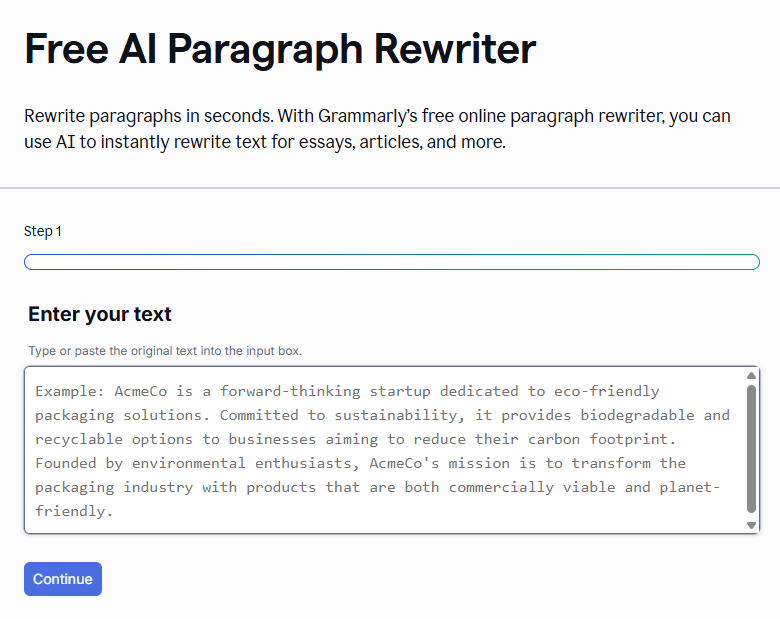
Image credit: Grammarly
Best for: Writing assistance and communication support.
GrammarlyGO is a generative AI feature within Grammarly that assists users in drafting, editing, and refining written communication. Professionals commonly rely on it to improve email clarity, adjust tone in business writing, and ensure consistent grammar in internal and external communications.
4. HubSpot AI
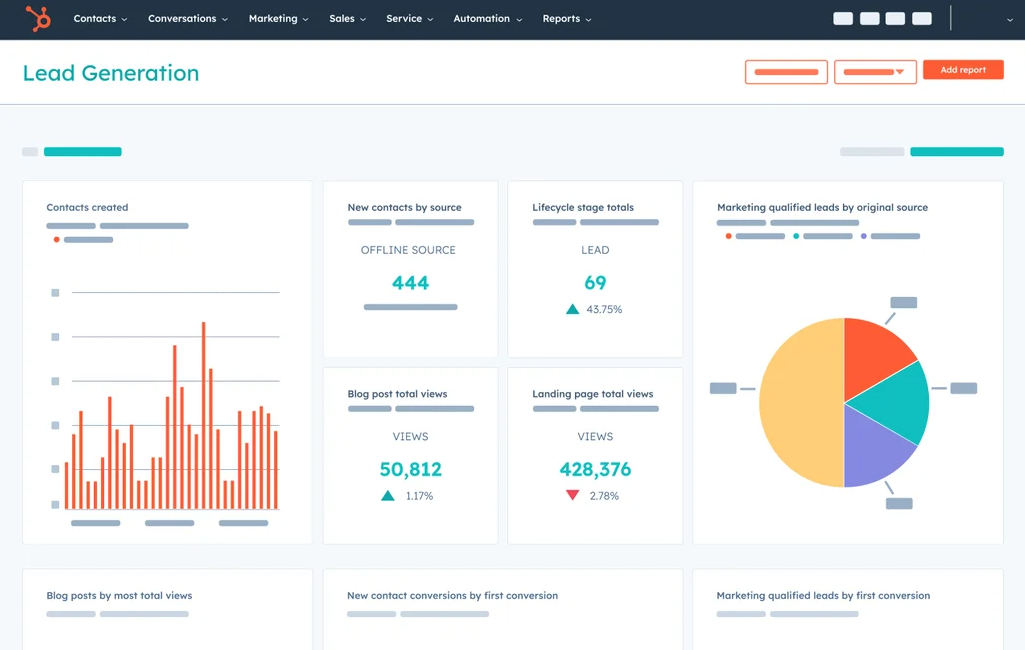
Image credit: HubSpot AI
Best for: AI-powered marketing and customer relationship management.
HubSpot AI integrates artificial intelligence features across HubSpot’s CRM, marketing, and sales platforms. Marketing and sales teams often use it to support AI in marketing activities such as generating campaign content, analysing customer data, and automating outreach workflows within their customer relationship management system.
5. Intercom Fin
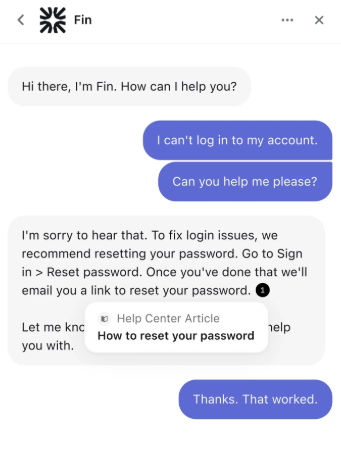
Image credit: Intercom
Best for: AI customer service automation.
Intercom Fin is an AI customer support assistant built into the Intercom messaging platform. Customer support teams deploy it to answer common enquiries automatically, resolve routine requests, and route more complex issues to human agents.
6. Microsoft Copilot
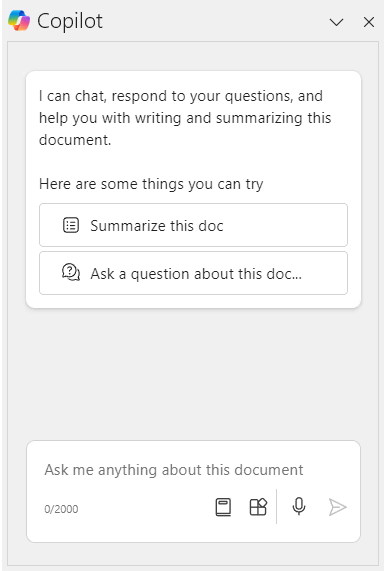
Image credit: Microsoft
Best for: Workplace productivity and document generation.
Microsoft Copilot is an AI assistant integrated into Microsoft 365 applications such as Word, Excel, PowerPoint, and Teams. Professionals use it to generate documents, summarise meetings, analyse spreadsheets, and automate routine workplace tasks within familiar productivity software.
7. Notion AI
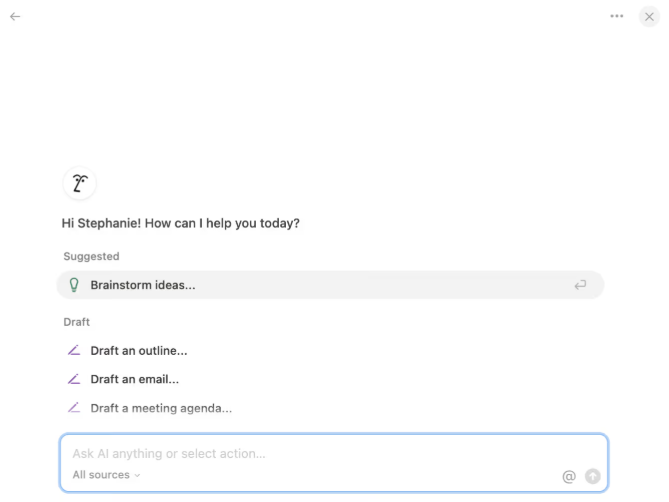
Best for: Knowledge management and internal documentation.
Notion AI is an artificial intelligence feature within the Notion workspace that supports knowledge management and documentation. Teams often use it to organise notes, generate internal documentation, and summarise project information within shared workspaces.
8. Tableau AI
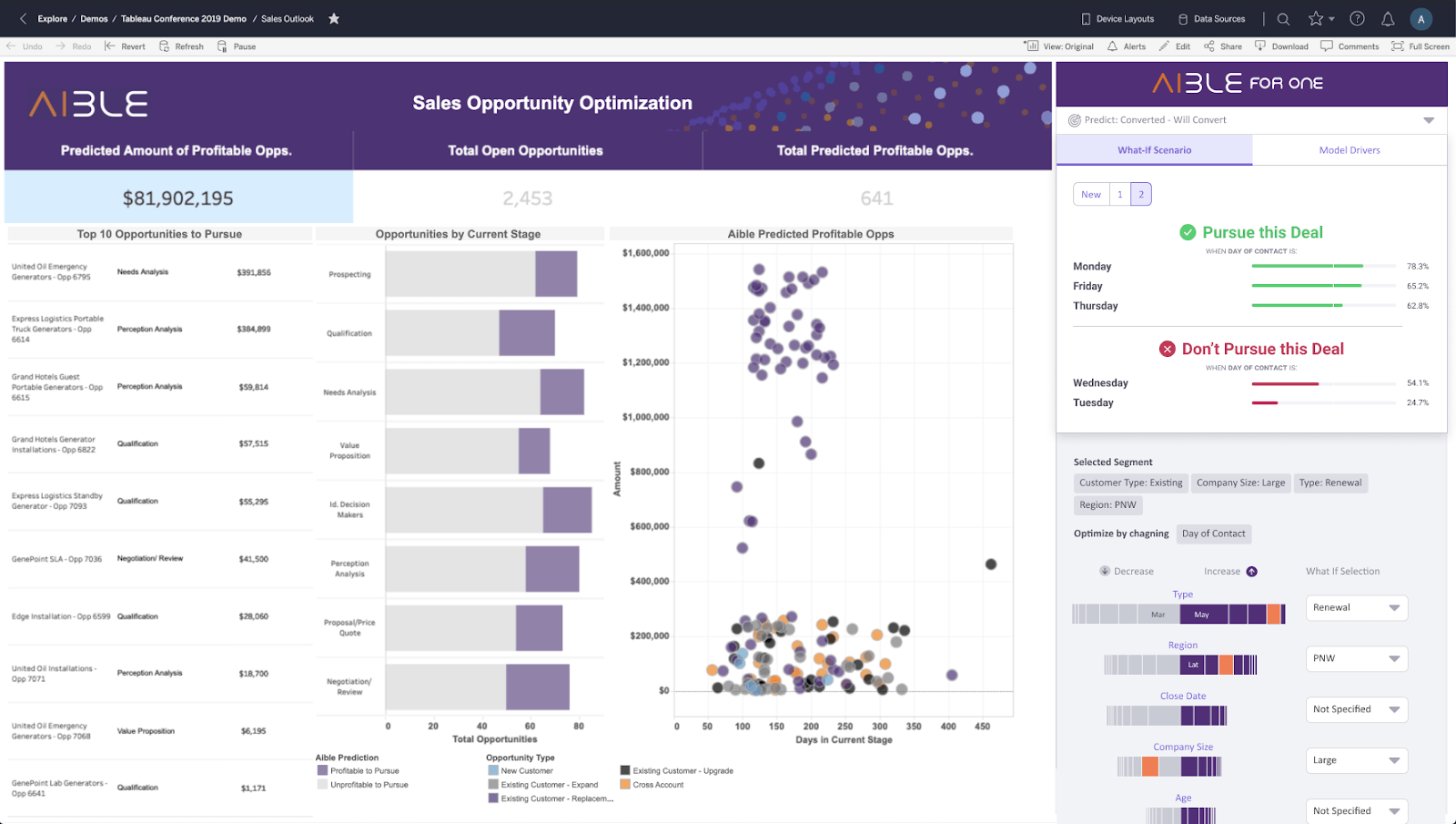
Image credit: Tableau
Best for: Data analysis and business intelligence.
Tableau AI introduces artificial intelligence capabilities within the Tableau analytics platform to support data exploration and insights generation. Data analysts and business teams use it to analyse datasets, generate visual dashboards, and identify trends that support strategic decision-making.
9. UiPath
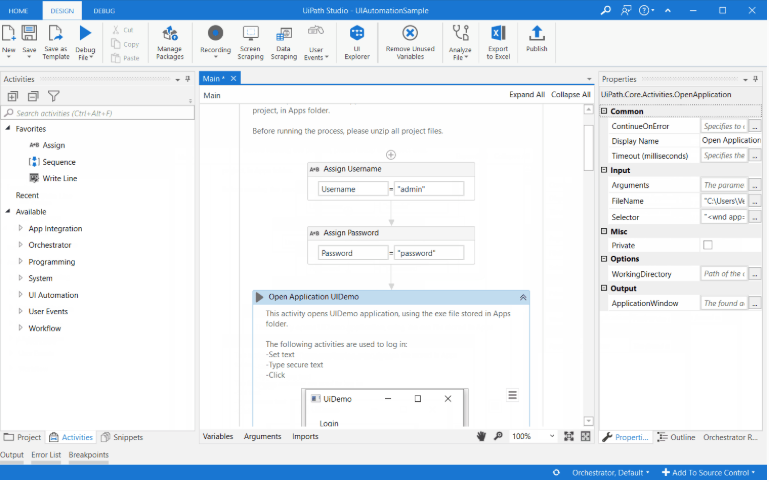
Image credit: UiPath
Best for: Robotic process automation (RPA).
UiPath is an automation platform that combines robotic process automation (RPA) with artificial intelligence. Organisations deploy it to automate repetitive operational processes such as data entry, invoice processing, and workflow reporting.
10. Zapier
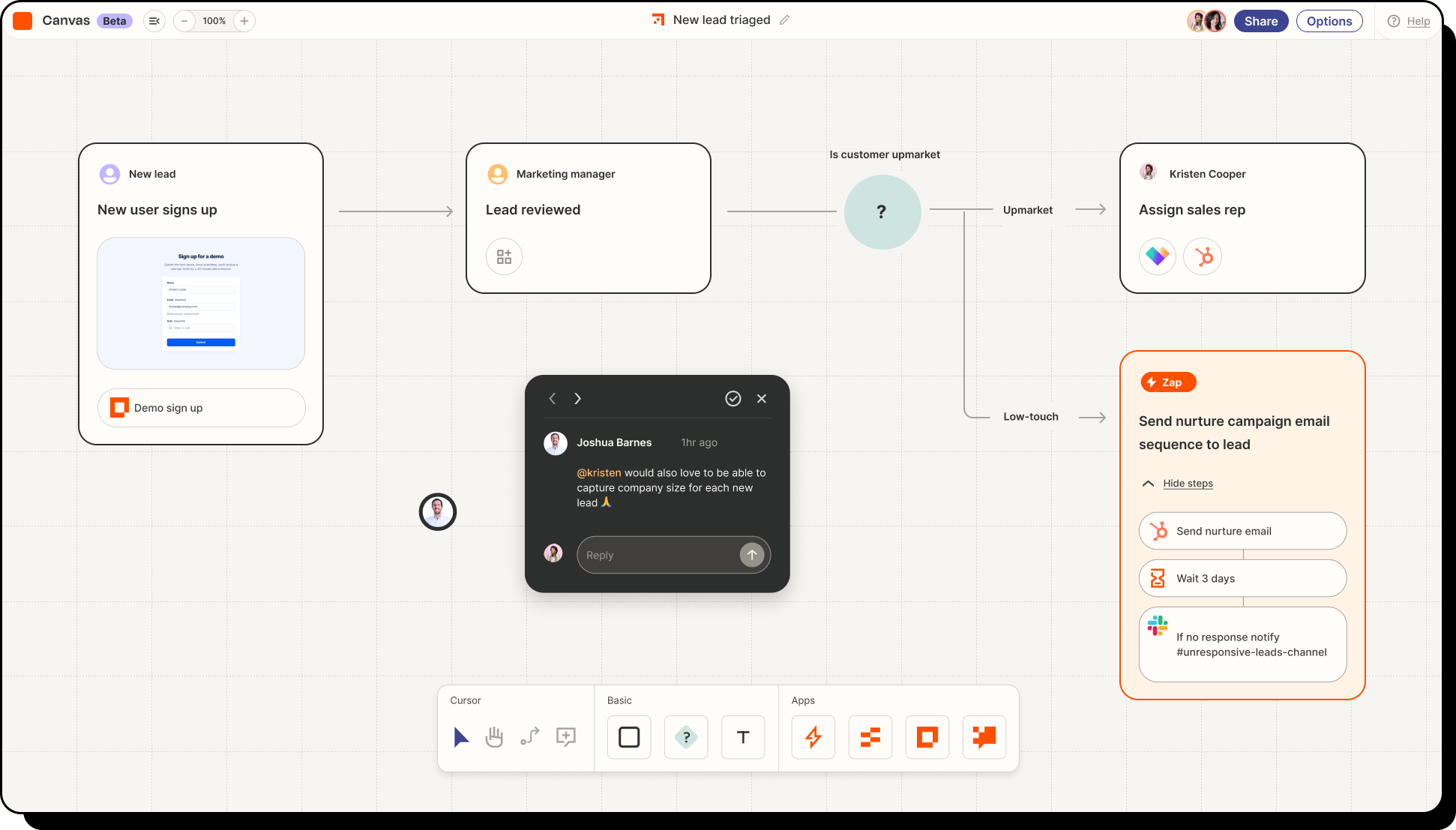
Image credit: Zapier
Best for: Workflow automation across software tools.
Zapier is a workflow automation platform that connects different business applications and enables tasks to be automated across systems. Teams use it to set up workflows such as sending notifications, transferring data, and updating records across tools.
Why Are Businesses Adopting AI Tools in 2026?
AI adoption among businesses is expanding rapidly, reflecting a broader shift towards data-driven and technology-enabled operations. In Singapore, this growth is particularly evident. According to the IMDA Singapore Digital Economy Report 2025, AI adoption among large enterprises increased from 44% in 2023 to 62.5% in 2024, while adoption among SMEs rose from 4.2% to 14.5% over the same period.
As organisations explore these technologies, understanding the role of AI for business can help leaders identify where AI tools create the most strategic value.
Key reasons include:
- Improving productivity and operational efficiency: Automation of routine tasks such as drafting documents, analysing data, and responding to customer enquiries.
- Enhancing data-driven decision-making: Large datasets can be processed quickly to identify patterns that traditional analytics may miss.
- Automating repetitive business processes: AI-powered automation helps organisations reduce repetitive work across departments. McKinsey estimates that up to 30% of current work hours could be automated by 2030, allowing employees to focus on higher-value and more strategic activities.
How to Choose the Right AI Tools for Your Business?
Businesses should evaluate AI tools based on operational needs, technical requirements, cost considerations, and integration with existing systems. Rather than adopting tools based on popularity alone, organisations should first identify the problem they want to solve. They can then assess whether an AI tool can deliver measurable improvements in efficiency, productivity or decision-making.
Identify the Business Problem AI Should Solve
Organisations should begin AI adoption by clearly identifying the operational challenge the tool is expected to address. This may include improving productivity, automating repetitive processes, enhancing customer support, or strengthening data analysis capabilities.
Evaluate Integration with Existing Systems
AI tools that integrate with existing software platforms are generally easier to implement and manage. Businesses should assess whether the tool can connect with systems such as CRM platforms, analytics software, or collaboration tools already used within the organisation.
Assess Data Security and Governance Requirements
AI systems rely on reliable and well-structured data to function effectively. Organisations should ensure that any AI tools adopted comply with relevant data protection regulations and internal governance policies, particularly when handling sensitive business or customer information.
Develop Internal AI Skills and Training
Adopting AI tools effectively requires employees who understand how artificial intelligence applies to business processes. Organisations often address this skills gap through targeted training in areas such as generative AI, data analytics, and AI-driven decision-making. For example, SMU Academy offers courses such as the Advanced Certificate in Generative AI for Digital Marketing, Artificial Intelligence (AI) in Marketing: The Next Leap and Advanced Certificate in Generative Artificial Intelligence-Enhanced Social Media Content Creation, which explores how AI can support marketing strategy, content creation, and campaign optimisation.
Preparing Businesses for AI Adoption
AI tools are increasingly integrated into business software platforms across functions such as marketing, analytics, and customer service. Organisations use them to generate marketing content, analyse operational data, and automate routine workflows.
However, technology alone does not create value. Businesses that combine AI adoption with strong data practices and workforce capability development will be best positioned to benefit from these tools.
Professionals interested in developing practical capabilities in this area can explore AI programmes offered by SMU Academy, which examine how artificial intelligence can be applied in business contexts.
FAQs About AI Tools for Business
What are AI tools?
AI tools are digital systems that apply artificial intelligence techniques to perform tasks that typically require human judgment or reasoning. These tools operate using models trained on large datasets, allowing them to recognise patterns, interpret inputs, and produce relevant outputs based on context.
What are the best AI tools for business?
The best AI tools for business include platforms such as ChatGPT, Microsoft Copilot, Notion AI, Zapier, and Tableau AI. These tools help organisations automate tasks, analyse data, generate content, and improve productivity across business functions such as marketing, customer service, and operations.
What are the 3 most popular AI tools?
Three widely used AI tools in business environments are ChatGPT, Microsoft Copilot, and Notion AI. These tools are commonly used for tasks such as content creation, research, document generation, and workflow assistance.
How do businesses use AI tools?
Businesses use AI tools to automate repetitive tasks, analyse large datasets, generate marketing content, and improve customer support operations. These technologies help organisations increase productivity and support data-driven decision-making across different departments.
What are the free AI tools available?
Free AI tools include platforms such as Google Gemini, Grammarly, and Perplexity AI, which support tasks such as drafting content, refining writing, and answering queries. They typically operate on a freemium model with optional paid upgrades for advanced features.
Which AI tools help automate business workflows?
AI tools that support workflow automation include platforms such as Zapier, UiPath, and Microsoft Power Automate. These tools are designed to connect applications, trigger actions based on predefined rules, and manage multi-step processes across systems, helping organisations improve process consistency and reduce manual coordination.