


Organisations are placing greater emphasis on reducing environmental and social impact across their supply chains, making procurement an important part of sustainability efforts. Procurement decisions influence emissions, supplier practices, and operational risks, particularly within complex global supply chains.
According to the 2021 CDP Global Supply Chain Report, supply chain emissions are, on average, more than 11 times higher than companies’ operational emissions. This highlights how procurement decisions influence sustainability outcomes across value chains.
This article explains the fundamentals of sustainable procurement, including its 3 pillars, key benefits, and common implementation challenges. It also outlines practical steps organisations can take to integrate sustainability considerations into procurement strategies.
Key Takeaways
- Sustainable procurement integrates environmental, social, and economic considerations into purchasing decisions, ensuring suppliers are evaluated beyond cost and quality.
- It helps organisations reduce supply chain risks and environmental impact, while supporting broader corporate sustainability goals.
- Implementing sustainable procurement involves setting clear policies, evaluating suppliers, and monitoring sustainability performance.
- Procurement professionals require ESG and responsible sourcing skills to manage sustainable supply chains effectively.
What Is Sustainable Procurement?
Sustainable procurement involves incorporating environmental, social, and economic considerations into purchasing and supplier selection decisions. It aligns closely with the Triple Bottom Line framework, which emphasises balancing environmental stewardship, social responsibility, and long-term economic value.
Procurement teams assess suppliers not only on cost and quality, but also on factors such as environmental impact, labour practices, and supply reliability. Incorporating these factors into procurement processes helps reduce risks, improve transparency, and build more resilient and responsible supply chains.
What Are the 3 Pillars of Sustainable Procurement?
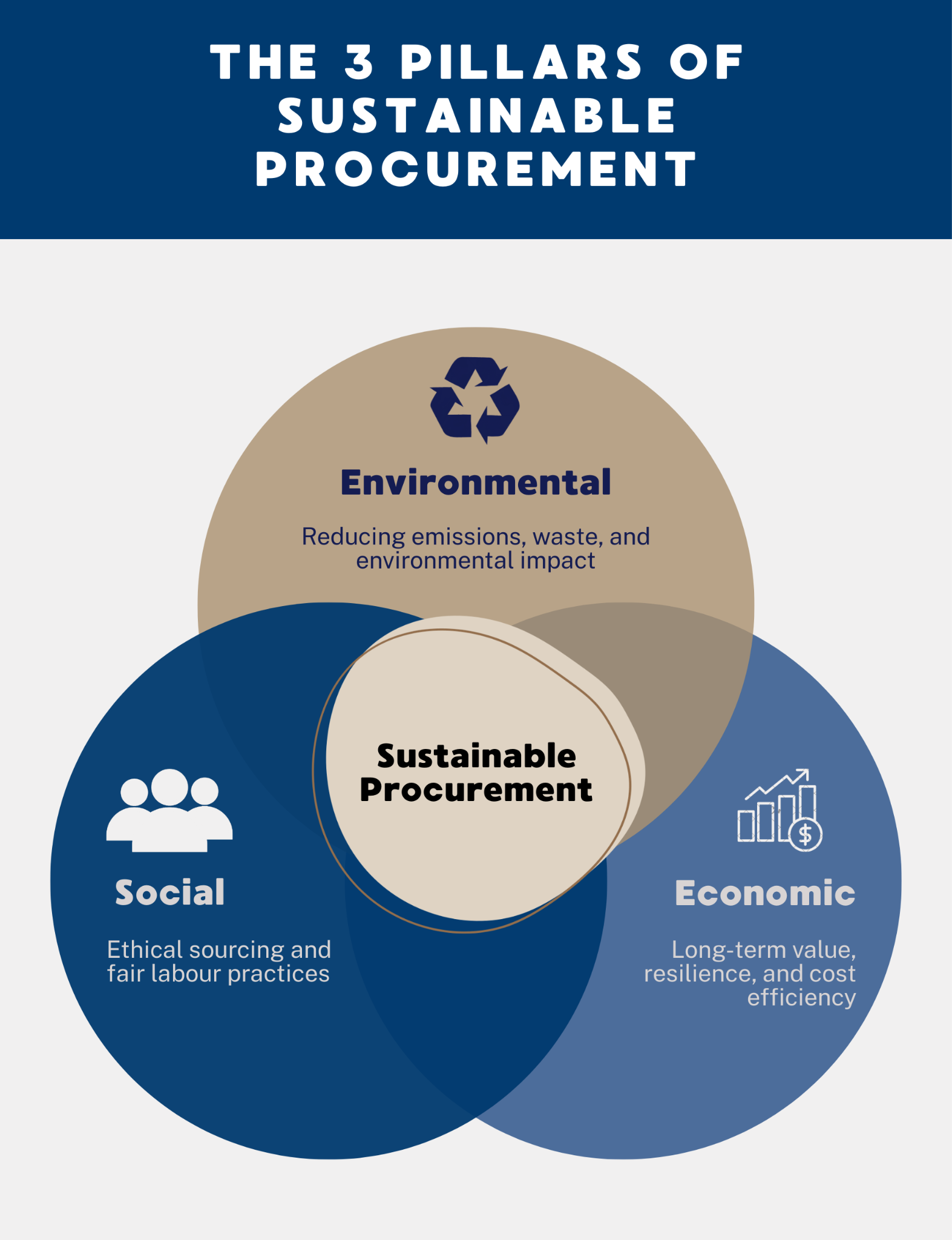
The 3 pillars of sustainable procurement are environmental, social, and economic. These principles guide how firms evaluate suppliers, manage risks, and create long-term value across supply chains.
Environmental
Procurement decisions play a significant role in shaping an organisation’s environmental impact, particularly across upstream supply chains. As a result, organisations increasingly assess suppliers based on carbon emissions, resource efficiency, waste management practices, and compliance with environmental regulations.
This may involve selecting materials with lower environmental impact, reducing packaging waste, or working with suppliers that adopt energy-efficient production methods.
Social
Beyond environmental factors, procurement also influences working conditions and labour practices across supplier networks. Suppliers are evaluated based on criteria such as labour standards, workplace safety, human rights policies, and fair wages.
To reinforce these expectations, many businesses implement supplier codes of conduct to ensure more responsible sourcing while reducing reputational and compliance risks.
Economic
Economic considerations focus on creating value while maintaining financial stability and supply chain resilience. Instead of prioritising the lowest upfront cost, organisations consider factors like total cost of ownership, supplier reliability, and performance over time.
Taking this broader perspective supports more stable supplier relationships and reduces the risk of disruptions over time.
What Are the Benefits of Sustainable Procurement?
More firms are integrating sustainability considerations into procurement decisions. These priorities reflect a shift towards sustainability in business, where procurement plays a key role in supporting responsible operations.
According to Deloitte’s Global Chief Procurement Officer Survey (2023), 62% of procurement leaders are targeting climate mitigation initiatives, while 72% prioritise waste reduction and material circularity in their sourcing strategies. This indicates that sustainability considerations are becoming central to procurement decision-making.
As procurement aligns more closely with long-term business growth strategies, developing the right capabilities becomes increasingly important. SMU Academy’s Sustainable Supply Chains and Circular Economy for Future-Ready Businesses equips professionals with the knowledge to improve resource efficiency, strengthen supply chain resilience, and implement responsible sourcing practices effectively.
Key benefits of sustainable procurement include:
- Reduced environmental impact: Prioritising materials and services that reduce emissions, conserve resources, and minimise waste
- Stronger supply chain resilience: Working with transparent suppliers improves risk visibility and reduces disruptions
- Improved compliance and risk management: Aligning procurement with environmental and labour standards helps mitigate legal and reputational risks
- Long-term cost efficiency: Reduces overall costs through improved resource efficiency and waste reduction
- Enhanced stakeholder confidence: Responsible sourcing strengthens credibility with investors, regulators, customers, and employees
What Are the Challenges of Sustainable Procurement?
Implementing sustainable procurement can be complex, particularly for organisations with large or global supply chains. Balancing sustainability goals with cost pressures, supplier capabilities, and operational constraints often requires careful coordination.
Despite growing interest in responsible sourcing, many businesses still face implementation barriers. Industry research indicates that 40% of procurement teams have yet to define or measure sustainability-related factors, highlighting the gap between sustainability ambitions and actual procurement practices.
Common challenges include:
- Limited supplier transparency: Lack of visibility into environmental and labour practices across multi-tier supply chains
- Higher short-term investment: Adopting sustainable materials, certifications, and responsible sourcing initiatives often requires higher upfront costs
- Complex global supply chains: Coordinating sustainability standards across international suppliers requires constant oversight and supplier engagement
- Lack of standardised sustainability metrics: Differences in reporting frameworks and metrics make it challenging to evaluate and compare supplier sustainability performance
- Gaps in supplier capability: Smaller suppliers may lack the resources or expertise needed to meet sustainability requirements
Addressing these challenges often requires a stronger understanding of sustainability strategy, governance, and ESG integration. SMU Academy’s Advanced Certificate in Sustainability and Sustainable Business helps professionals develop the knowledge needed to navigate regulatory requirements, improve reporting practices, and implement more effective sustainable procurement strategies.
Examples of Sustainable Procurement in Practice
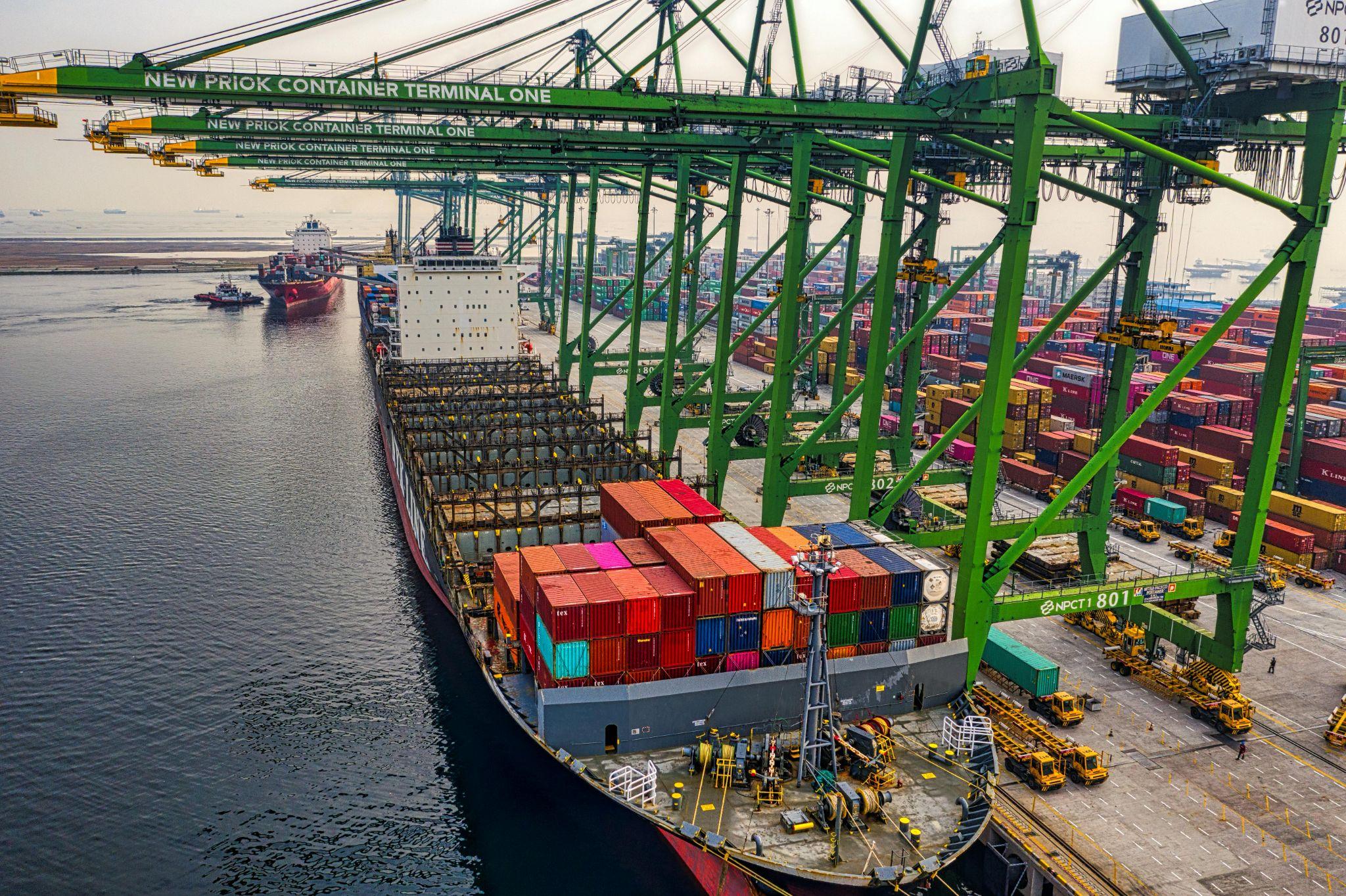
Many organisations are strengthening supplier partnerships to improve environmental and social practices across operations. According to the World Economic Forum, supply chains account for more than 80% of global greenhouse gas emissions, underscoring the importance of supplier engagement in sustainability efforts.
Understanding how these practices are applied in real-world contexts requires both strategic and operational knowledge. Programmes such as SMU Academy’s Industry Graduate Diploma in Sustainable Procurement provide practical insights into responsible sourcing, supplier engagement, and sustainability integration.
The following examples illustrate how companies apply sustainable procurement principles within supply chain management:
Apple: Renewable Energy in Supplier Manufacturing
Apple’s Supplier Clean Energy Programme requires manufacturing partners to transition to renewable electricity. According to the company’s Environmental Progress Report (2024), this has contributed to approximately 21% reduction in Scope 3 emissions between 2019 and 2023, demonstrating how procurement standards can drive measurable environmental impact at scale.
Unilever: Sustainable Agricultural Sourcing
Across key raw materials such as palm oil, tea, and soy, Unilever integrates sustainability standards into its sourcing practices. As outlined in Unilever’s 2025 Annual Report, 81% of key crops are verified as sustainably sourced, reflecting progress in reducing environmental impact and strengthening responsible sourcing across its agricultural supply chains.
IKEA: Responsible Forestry and Sustainable Materials
IKEA prioritises responsible sourcing in its procurement practices, particularly for wood and raw materials. According to IKEA’s sustainability strategy, 55.8% of materials sourced are renewable, with a target to reach 100% renewable or recycled materials by 2030, highlighting its ongoing commitment to sustainable sourcing.
How Can Organisations Implement Sustainable Procurement?
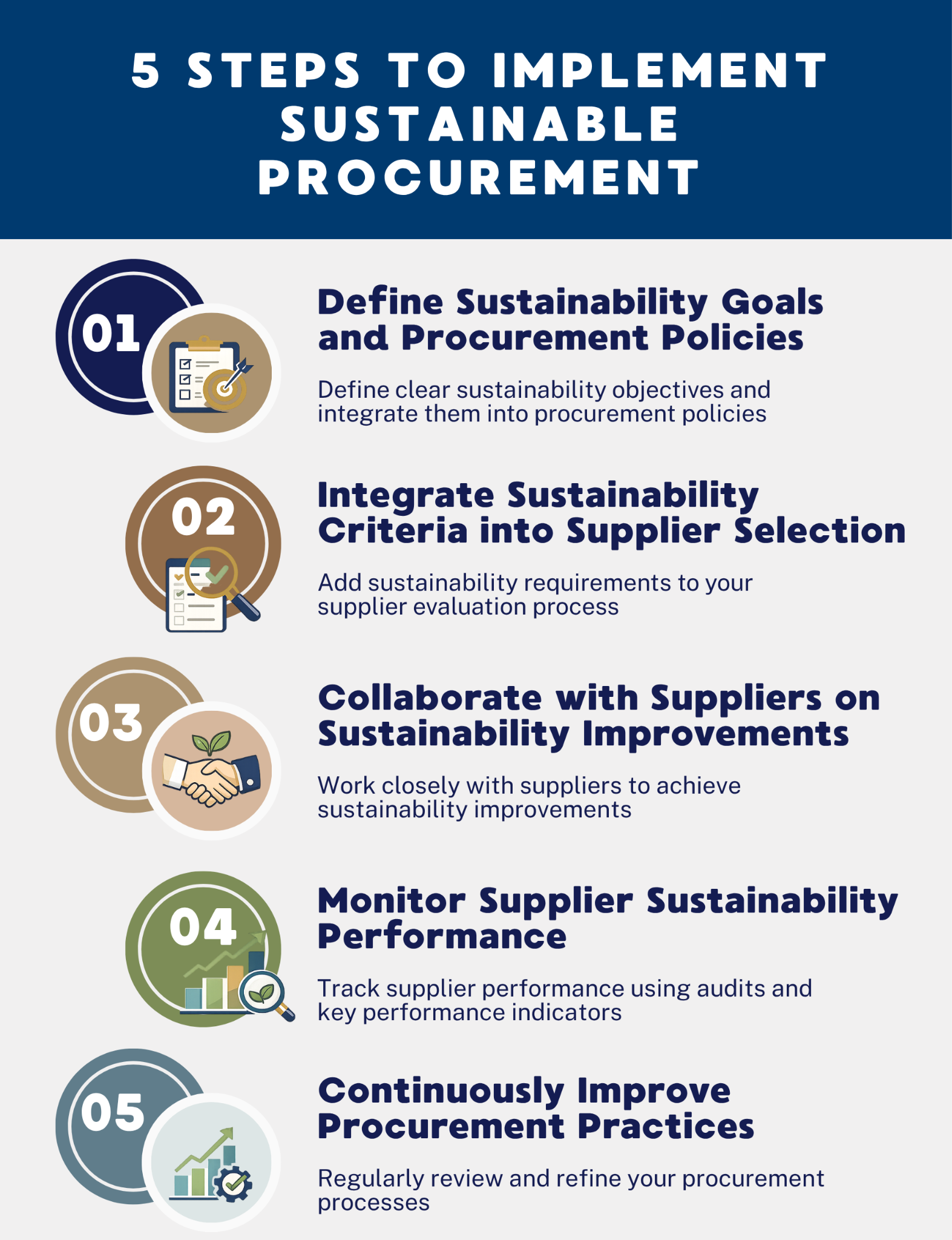
Implementing sustainable procurement requires embedding sustainability criteria into procurement policies, supplier evaluation, and day-to-day decision-making across supply chains. Businesses typically implement the process through 5 key steps:
Step 1: Define Sustainability Goals and Procurement Policies
The process begins with establishing clear sustainability objectives that align with organisational priorities. These goals are then incorporated into procurement policies to ensure criteria such as emissions reduction, ethical labour practices, and resource efficiency are applied consistently across sourcing decisions.
Step 2: Integrate Sustainability Criteria Into Supplier Selection
Sustainability requirements are incorporated into supplier evaluation alongside cost and quality considerations. This helps ensure sourcing decisions align with environmental standards and labour practices.
Step 3: Collaborate with Suppliers on Sustainability Improvements
Procurement teams work closely with suppliers to improve environmental and social practices. This may include supporting energy-efficient production, reducing waste, and strengthening labour standards.
Step 4: Monitor Supplier Sustainability Performance
Tracking supplier performance is essential to ensure compliance and identify risks. Organisations typically use audits, reporting frameworks, and Key Performance Indicators (KPIs) to evaluate sustainability outcomes over time.
Step 5: Continuously Improve Procurement Practices
Sustainable procurement is an ongoing process that evolves alongside regulatory and business requirements. Regular reviews of procurement policies, supplier data, and sustainability outcomes help firms refine their strategies and strengthen responsible sourcing practices.
Organisations often strengthen their sustainable procurement capabilities through training and professional development. Programmes such as SMU Academy’s Advanced Certificate in Sustainable Procurement cover areas including responsible sourcing and sustainability evaluation, supporting the practical application of these principles. Professionals can also explore a wider range of sustainability courses offered by SMU Academy to build capabilities in ESG integration, supplier evaluation, and responsible sourcing.
These skills are relevant for individuals pursuing procurement and supply chain career development.
How Do Organisations Measure Sustainable Procurement?
A significant portion of corporate sustainability impact occurs within supply chains. Research by McKinsey & Company indicates that supply chains account for more than 90% of most companies’ environmental impact.
To manage this effectively, firms measure sustainable procurement by tracking key indicators that reflect supplier performance, environmental impact, and social outcomes. These measurements are often supported by ESG reporting frameworks.
Key indicators include:
- Supplier ESG compliance: Proportion of suppliers meeting environmental, labour, and ethical sourcing standards
- Supply chain emissions: Greenhouse gas emissions associated with purchased goods and services
- Sustainable sourcing rate: Percentage of suppliers meeting sustainability criteria or certifications
- Waste and resource efficiency: Reduction in material waste and improvement in resource utilisation
To effectively manage these requirements, professionals often need a deeper understanding of sustainability reporting and risk management. Programmes such as SMU Academy’s Mastering Sustainable Business Practices: From Reporting to Risk Management cover these areas, supporting the integration of sustainability considerations into business operations.
Future of Sustainable Procurement
Sustainable procurement is becoming a core part of business strategy as organisations respond to stricter regulations, evolving ESG reporting requirements, and rising stakeholder expectations. At the same time, advances in data analytics and supply chain transparency, driven by digital transformation initiatives, allow procurement teams to better monitor supplier performance and track sustainability outcomes.
As these developments continue, procurement functions are expected to play a more strategic role in managing supply chain risks, improving accountability, and supporting long-term environmental, social, and economic objectives.
SMU Academy offers sustainable procurement programmes that help professionals build the capabilities needed to implement sustainable procurement practices effectively
FAQs About Sustainable Procurement
Why is sustainable procurement important?
Sustainable procurement practices help organisations reduce environmental impact, strengthen supply chain resilience, and ensure ethical sourcing practices. By evaluating suppliers based on sustainability criteria, companies can better manage risks, meet regulatory requirements, and support long-term sustainability goals.
What is the difference between sustainable procurement and green procurement?
Sustainable procurement considers environmental, social, and economic factors in purchasing decisions, while green procurement focuses primarily on reducing environmental impact. It therefore covers a wider range of issues, including ethical labour practices, supplier governance, and long-term economic value.
What are the 5R’s of sustainable procurement?
The 5R’s of sustainable procurement refer to reduce, reuse, recycle, repair, and recover. These principles guide organisations in minimising waste, extending product lifecycles, and improving resource efficiency across supply chains.
What industries use sustainable procurement?
Sustainable procurement is commonly applied in industries with complex supply chains, such as manufacturing, retail, construction, technology, and food production. In these sectors, organisations often assess suppliers based on environmental impact, labour standards, and resource efficiency to support responsible sourcing.
What is sustainable sourcing?
Sustainable sourcing refers to selecting suppliers and materials that meet environmental, social, and ethical standards. It is a key component of sustainable procurement and focuses on responsible supply chain practices such as reducing environmental impact, ensuring fair labour conditions, and supporting long-term supplier sustainability.