


Digital marketing plays a central role in how organisations engage customers, build brand presence and drive growth. As businesses continue to prioritise digital channels, demand for skilled digital marketing professionals remains strong.
In this article, we break down the main digital marketing positions, what employers are looking for, typical salary expectations, and the trends shaping the industry, so you can make clearer and more confident decisions.
Key Takeaways
- Digital marketing is a high-demand field in Singapore, with strong hiring across performance, content, and specialised roles.
- Employers value measurable results, data skills, and AI literacy more than broad generalist experience.
- Salaries vary by role and expertise, with higher earning potential linked to in-demand skills and continuous upskilling.
- Digital marketing skills can be built through structured learning, hands-on experience, and strong portfolios that demonstrate real business impact.
What Is Digital Marketing?
Digital marketing is the use of online channels such as websites, search engines, social media, email, and mobile platforms to promote products and services. It enables targeted audience engagement, performance tracking, and real-time optimisation, making it a central part of modern marketing strategies alongside traditional methods.
Benefits Of Digital Marketing
Digital marketing offers businesses a powerful way to reach, engage, and convert their audience more effectively than traditional methods. Here are 5 key benefits that make digital marketing essential in today’s competitive landscape.
1. Global Reach
Digital marketing allows businesses to reach audiences beyond their local area. Through online channels, brands can connect with potential customers across different cities, countries, and time zones at any time.
2. Cost-Effective Marketing
Compared to traditional advertising, digital marketing requires lower upfront costs. Strategies like Search Engine Optimisation (SEO), content marketing, and social media can deliver strong results even with limited budgets, making it suitable for businesses of all sizes.
3. Measurable Results
Digital marketing makes it easy to track performance. Businesses can measure clicks, traffic, leads, and conversions, helping them understand return on investment and improve campaigns over time.
4. Targeted Advertising
Digital platforms allow precise audience targeting based on interests, behaviour, and demographics. This ensures marketing messages reach people who are more likely to engage and convert.
5. Higher Engagement and Conversions
Online channels enable two-way communication through social media, email, and websites. This increases engagement, builds trust, and leads to higher conversion rates.
Understanding these benefits requires not only awareness of individual channels but also the ability to apply strategy and analytics in an integrated manner. Programmes such as Digital Marketing Masterclass: Maximising Marketing Impact With Data, Digital Marketing Capstone Project, and (SCTP) Advanced Certificate in Digital Marketing provide structured exposure to performance measurement, campaign optimisation and practical application across digital platforms.
Types Of Digital Marketing
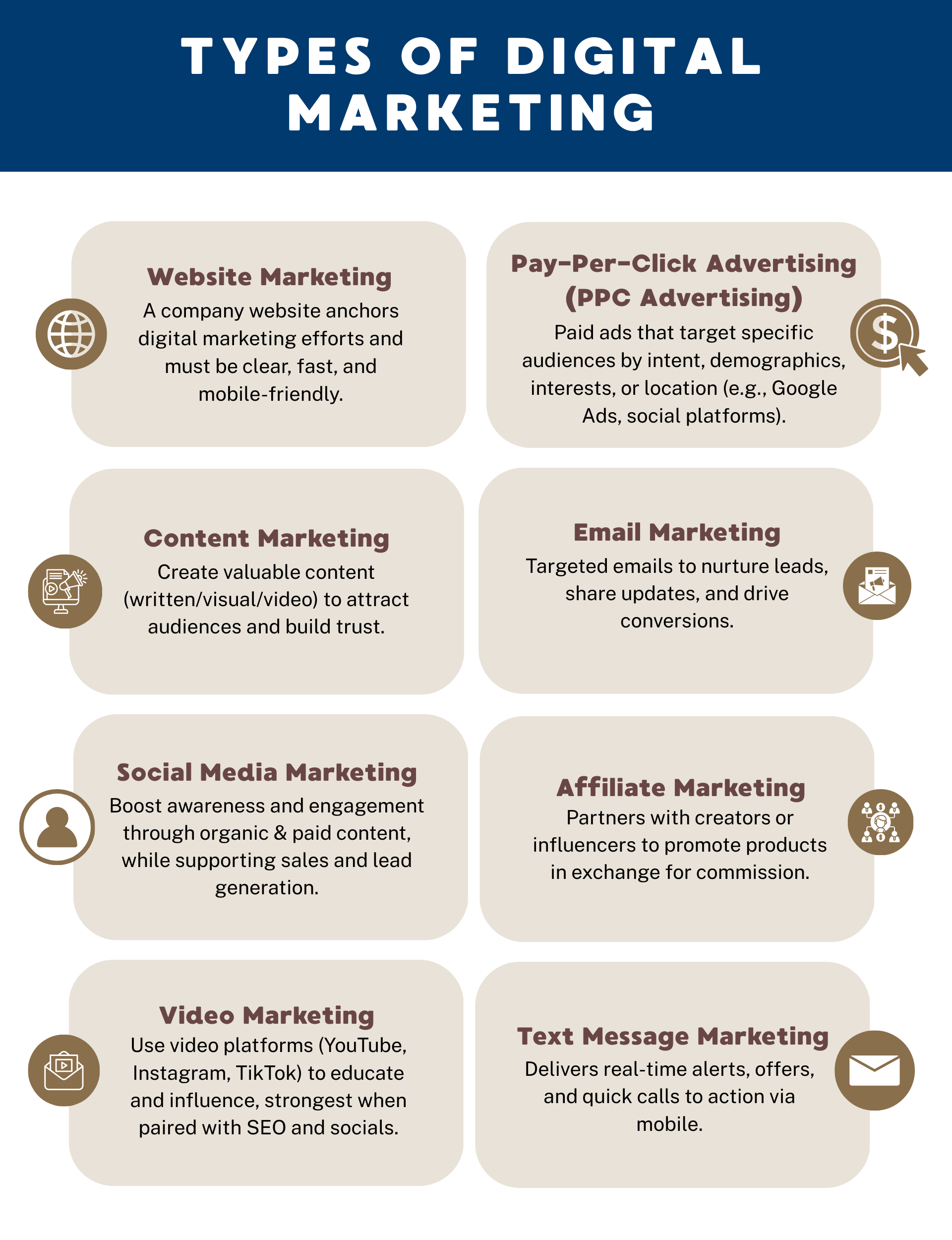
Digital marketing encompasses a range of channels that organisations use to reach and engage audiences online. Each channel serves a distinct purpose and is often most effective when integrated into a broader strategy.
Website Marketing
A company website acts as the central hub of digital marketing efforts. It should be well designed, intuitive to navigate, fast loading, and optimised for mobile use. Clear brand positioning and structured content also support both organic visibility and paid acquisition efforts such as Search Engine Marketing (SEM), improving performance across relevant search queries.
Pay-Per-Click Advertising (PPC Advertising)
PPC advertising allows businesses to display paid ads on search engines and digital platforms, targeting users based on search intent, demographics, interests, or location. Common platforms include Google Ads and social media advertising networks.
Content Marketing
Content marketing involves the strategic creation and distribution of written, visual and video content to attract and engage defined audiences. Instead of focusing on direct promotion, it emphasises delivering relevant and informative material that builds credibility, strengthens brand positioning and supports long-term customer relationships.
Email Marketing
Email marketing involves sending targeted messages to subscribers to nurture leads, share updates, and encourage conversions. When used strategically, it remains a highly effective channel despite increasing competition for attention.
Social Media Marketing
Social Media Marketing supports brand visibility, audience engagement and credibility through a combination of organic content and paid campaigns. It also serves as an effective channel for lead generation and sales conversion, reflecting its increasing influence across different stages of the consumer decision-making process.
Affiliate Marketing
Affiliate marketing relies on third parties, such as content creators or influencers, to promote products or services in exchange for a commission. This performance-based model expands reach while aligning costs with results.
Video Marketing
Video marketing uses platforms such as YouTube, Instagram, and TikTok to educate, inform, or influence audiences. It is most effective when combined with content marketing, search optimisation, and social media strategies.
Text Message Marketing
Text message marketing delivers time-sensitive updates, promotions, or calls to action directly to users’ mobile devices. It is commonly used for reminders, limited-time offers, and transactional messages such as payment notifications.
What Digital Marketing Job Opportunities Are Available In Singapore?
Singapore’s digital marketing landscape offers a range of roles, covering both strategic leadership and specialised execution. Below are some of the most common digital marketing job opportunities available.
| Role | Average Monthly Salary (SGD) | What the Role Does | Core Skills Employers Look For |
|---|---|---|---|
| SEO Lead | $5,000 – $5,200 |
|
|
| Digital Marketing Manager | $5,800 – $6,000 |
|
|
| Content Strategist | $4,500 – $6,500 |
|
|
| Client Success Manager | $4,800 – $7,300 |
|
|
| Performance Marketing Specialist | $3,500 – $4,300 |
|
|
Digital Marketing Recruitment Trends In 2026
Digital marketing recruitment in 2026 is being shaped by rapid advances in technology, rising performance expectations, and evolving team structures. Employers are moving away from volume hiring and broad generalist roles, focusing instead on talent that can directly demonstrate business impact.
Greater Emphasis On Performance
What is changing: Hiring decisions are increasingly tied to revenue contribution and measurable outcomes.
What employers want: Organisations are prioritising professionals who can connect marketing activity to growth metrics, attribution, and return on investment.
Shift Towards Specialised Skill Sets
What is changing: Traditional role definitions are evolving. SEO, paid media, and content roles now require stronger technical capability, data literacy, and comfort with AI-enabled workflows.
What employers want: Employers are seeking adaptable specialists who can operate across strategy, execution, and optimisation rather than within narrow silos.
AI Literacy
What is changing: AI is becoming part of everyday digital marketing workflows rather than a standalone function or role.
What employers want: Companies value marketers who can use automation responsibly, interpret AI-generated insights accurately, and apply human judgment where it matters most.
More Flexible Hiring Models
What is changing: Hiring is shifting toward contract, fractional, and project-based models.
What employers want: Employers are looking for strong leadership and flexible specialists who can deliver results without long-term cost commitments.
How Much Does A Digital Marketer Earn In Singapore?
In Singapore, the median base salary for entry-level digital marketers range from $3,500 to $4,800. Actual earnings can vary depending on factors such as experience level, specialisation, industry, and company size.
Professionals looking to increase their earning potential may also consider upskilling through these recognised programmes conducted by SMU Academy:
- Professional Certificate in Digital Marketing: Covers omni-channel strategy, digital promotion, and campaign management to build a strong foundation across core digital marketing disciplines.
- Digital Marketing Strategy, Planning and Analytics: Focuses on strategic planning, performance measurement, and data-driven decision making in a rapidly evolving digital landscape.
- (SCTP) Advanced Certificate in Generative AI for Digital Marketing Specialist: Designed for marketers looking to apply generative AI tools responsibly to improve content creation, optimisation, and campaign effectiveness.
Building Digital Marketing Skills for the Future
Digital marketing capabilities are increasingly essential across roles and industries. Professionals who understand how to plan, execute, and optimise campaigns across multiple digital channels are better equipped to adapt to changing technologies and employer expectations. Consistently developing these skills will strengthen long-term career prospects in a digital-first economy.
SMU Academy offers digital marketing programmes designed to equip professionals with practical, job-ready skills for today’s evolving marketing landscape.
FAQs About Digital Marketing
Is digital marketing in demand in Singapore?
Yes. Digital marketing is highly sought after in Singapore as businesses increasingly focus on online channels and digital transformation. The country’s tech-driven economy, strong e-commerce growth, and status as a regional business hub have created abundant opportunities for those looking to get into the field.
What do companies look for in a skilled digital marketer?
Companies look for digital marketers who can drive results, grow online presence, and make informed, data-driven decisions. Key skills often include:
- Data analysis: Interpreting metrics to guide decisions and improve performance
- Content creation: Writing and designing engaging posts, blogs, or visuals
- SEO and social media management: Boosting visibility and managing campaigns across platforms
- Paid advertising: Running and optimising ads for maximum reach and ROI
- Conversion optimisation: Improving website or campaign outcomes
What do you learn from digital marketing courses?
Digital marketing courses equip you with practical, in-demand skills to help businesses grow online and make data-driven decisions. You learn how to attract the right audience, increase visibility, and turn interest into measurable results. Areas covered typically include:
- PPC advertising: Running and optimising paid ads to drive targeted traffic and improve ROI
- SEO: Increasing website visibility and organic search rankings
- Content marketing: Creating engaging content to build brand authority
- Social media marketing: Managing and growing brand presence across platforms
- Electronic Direct Mail (EDM) marketing: Differs from traditional email marketing and ensures long-term customer engagement
- Data and analytics: Using performance data to optimise marketing decisions
- Video marketing: Creating videos to boost reach and engagement
- Customer Relationship Management: Managing customer relationships while developing technical, communication, and problem-solving skills
How to start working in digital marketing?
You can start a career in digital marketing by building the right skills, gaining hands-on experience, and making yourself visible to employers. Here is a simple step-by-step approach:
- Learn the fundamentals: Take digital marketing courses to understand SEO, paid ads, social media, email marketing, content, and analytics
- Get hands-on with tools: Use platforms like Google Analytics, Google Ads, SEO tools, CRM systems, and social media schedulers
- Build practical experience: Work on real or self-initiated projects and create a simple portfolio with results
- Strengthen your resume: Highlight marketing skills, tools, and measurable outcomes
- Network in the industry: Connect with marketers on LinkedIn, attend events, and join online communities
How to build a digital marketing portfolio?
To build a strong digital marketing portfolio, focus on showcasing your skills, results, and experience clearly and concisely.
- Show your best work: Include 2–3 strong projects or case studies with clear results
- Introduce yourself: Add your name, role, contact info, and a brief professional summary
- Highlight skills: Showcase SEO, content marketing, paid ads, social media, and analytics
- Include creative samples: Social posts, blogs, videos, emails, or landing pages
- Add certifications: Display relevant courses, awards, or achievements
- Use a clear layout: Choose a simple website or portfolio platform and organise sections logically
- Make it easy to contact: Include email, LinkedIn, or a contact form
Is it worth hiring a digital marketing agency?
Hiring a digital marketing agency can be beneficial for organisations that need specialised expertise, advanced tools, or extra support to run campaigns effectively. Agencies are useful when internal teams lack certain skills or when businesses want to scale their marketing efforts quickly. On the other hand, in-house teams may be a better fit for organisations that need close brand alignment and day-to-day control over marketing activities.
Preparing for a Career in Digital Marketing
Digital marketing continues to evolve alongside technology, data capabilities and consumer behaviour. Employers increasingly value professionals who can demonstrate measurable impact, apply analytical thinking and adapt to emerging tools.
Professionals looking to deepen their expertise may consider digital marketing courses that cover strategy, analytics and applied digital tools to remain relevant in a rapidly evolving field.