


Stakeholder management is a critical discipline that ensures organisations can effectively identify, prioritise, and maintain relationships with individuals or groups that influence their success. In today’s complex business environment, managing stakeholders is no longer optional. Projects with strong stakeholder management practices have a success rate of around 83%, compared to just 32% for those that do not prioritise them, highlighting the significant impact of effective relationship management on project outcomes.
This is especially important for modern organisations, such as those operating in an online business environment, where stakeholders can include customers, investors, regulators, and digital communities. Effective stakeholder management supports better decision-making, reduces risks, and strengthens alignment with organisational goals. It also plays a key role in shaping the customer experience and ensuring a smooth customer journey.
This article explores what stakeholder management is, how it differs from stakeholder engagement, its benefits, processes, and best practices, along with practical ways to improve your skills.
What Is Stakeholder Management?
Stakeholder management refers to the systematic process of identifying, analysing, and managing relationships with individuals or groups who can affect or are affected by a business or project. It involves aligning stakeholder expectations with organisational objectives through structured planning and communication.
Key Components of Stakeholder Management
Stakeholder management involves several core components that ensure effective relationship management and alignment with business goals.
- Identification: Recognising all relevant stakeholders involved in a project or organisation
- Analysis: Assessing stakeholders’ influence, interests, and expectations
- Planning: Developing tailored strategies to manage each stakeholder group
- Communication: Maintaining clear, timely, and consistent interactions
- Monitoring: Continuously reviewing stakeholder relationships and adjusting strategies
Who Are Stakeholders?
Stakeholders are individuals, groups, or organisations that have an interest in or are impacted by a company’s activities, decisions, or outcomes.
- Internal: Employees, managers, and shareholders who are directly involved in operations
- External: Customers, suppliers, regulators, and investors who interact with the business externally
- Primary: High-influence individuals such as board members or major investors
- Secondary: Communities, media, or advocacy groups who may indirectly influence outcomes
Differences Between Stakeholder Management and Stakeholder Engagement
Stakeholder management and stakeholder engagement are closely related but not identical. While stakeholder management focuses on the overall strategy of identifying and managing the parties involved, stakeholder engagement centres on the interactions and communication with them. In simple terms, management defines the approach, while engagement is how that approach is executed in practice.
| Aspect | Stakeholder Management | Stakeholder Engagement |
| Definition | Strategic process of identifying and managing stakeholders | Activities focused on interacting and involving stakeholders |
| Scope | Broad and long-term | More tactical and interaction-based |
| Focus | Alignment, risk management, and relationship strategy | Communication and participation |
| Objective | Ensure stakeholders support organisational goals | Build trust and involvement |
| Metrics | Satisfaction scores, risk reduction, alignment with objectives | Participation rates, feedback levels, engagement rates |
Benefits of Stakeholder Management
Effective stakeholder management provides organisations with a structured way to align expectations, reduce risks, and improve outcomes. By managing relationships proactively, businesses can enhance collaboration, build trust, and drive long-term success across projects and operations.
Better Risk Management
Proactively identifying stakeholder concerns enables businesses to address potential risks early, avoiding disruptions or reputational damage.
Competitive Advantage
Organisations that manage stakeholders effectively can respond more quickly to market needs and expectations, giving them an edge over competitors.
Enhanced Decision-Making
Understanding stakeholder perspectives allows organisations to make more informed and balanced decisions, reducing the likelihood of costly mistakes.
Greater Organisational Alignment
Stakeholder management ensures that all parties are working towards shared objectives, reducing miscommunication and inefficiencies.
Improved Project Success Rates
Projects that incorporate structured stakeholder management are generally more likely to meet deadlines and budgets because expectations are clearly defined and conflicts are minimised.
Increased Customer Satisfaction
When stakeholders such as customers are well-managed, businesses can improve the overall customer journey, leading to higher satisfaction and loyalty.
Stronger Relationships and Trust
Consistent and transparent communication helps build long-term trust, which is essential for collaboration and sustained partnerships.
Stakeholder Management Process
A structured stakeholder management process ensures that organisations can systematically manage relationships and expectations. It helps maintain clarity, reduce risks, and support better outcomes across projects and operations.
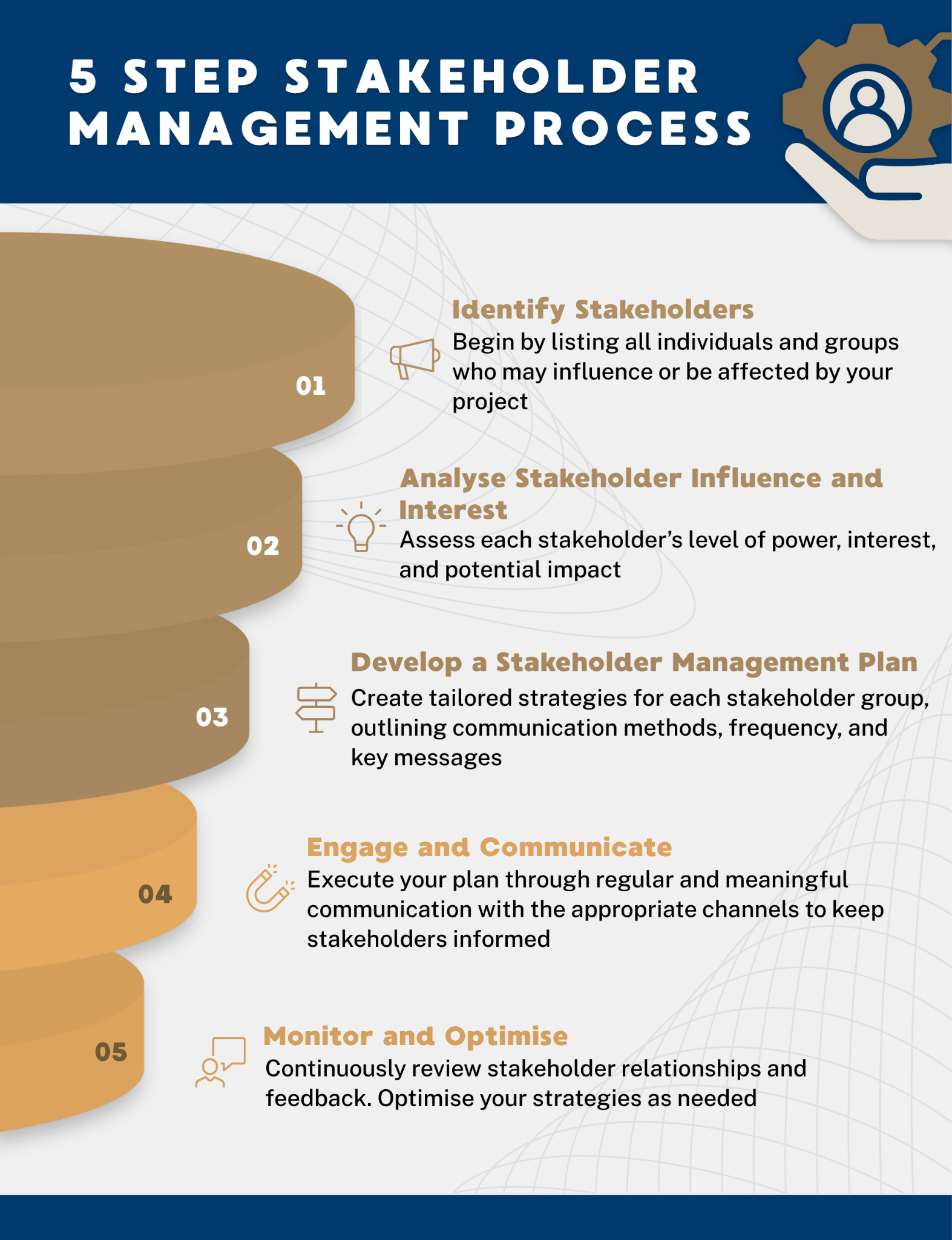
Step 1: Identify Stakeholders
Begin by listing all individuals and groups who may influence or be affected by your project. This includes internal teams, customers, suppliers, regulators, and investors.
Example: A company launching a new digital platform may identify IT teams, end users, regulators, and business partners as stakeholders.
Step 2: Analyse Stakeholder Influence and Interest
Assess each stakeholder’s level of power, interest, and potential impact on the project. Tools such as stakeholder mapping can help prioritise efforts.
Example: High-power stakeholders such as investors may require close management, while lower-impact groups may only need periodic updates.
Step 3: Develop a Stakeholder Management Plan
Create tailored strategies for each stakeholder group, outlining communication methods, frequency, and key messages. This ensures consistency and clarity.
Example: Senior stakeholders may receive monthly reports, while operational teams may require weekly updates.
Step 4: Engage and Communicate
Execute your plan through regular and meaningful communication. Use appropriate channels such as meetings, emails, or dashboards to keep stakeholders informed.
Example: Using project management tools to provide real-time updates can improve transparency and collaboration.
Step 5: Monitor and Optimise
Continuously review stakeholder relationships and feedback. Optimise your strategies as needed to address changes in priorities or concerns.
Example: If a stakeholder raises concerns about timelines, the plan can be revised to provide more frequent updates.
How to Improve Stakeholder Management Skills?
Improving stakeholder management skills requires a combination of practical experience, continuous learning, and strong interpersonal abilities. Building trust, managing expectations, and adapting to different stakeholder needs are essential for long-term success.
Map and Analyse Stakeholders
Develop a clear understanding of who your stakeholders are, their level of influence, and their expectations. Use tools such as stakeholder matrices to categorise them based on power and interest. This allows you to prioritise efforts and tailor your approach effectively.
For example, high-impact stakeholders may require detailed reporting, while others may only need general updates.
Develop Strong Communication Skills
Clear and persuasive communication is essential for managing expectations and building relationships. Strong communication skills, supported by both technical skills and soft skills, enable professionals to convey complex ideas effectively.
You can enhance these capabilities through courses such as:
- Advanced Communication Strategies: Using Strategic Persuasion To Get What You Want
- Persuasive Strategic Communication for Business Growth in the Digital Age
Build Relationships and Trust
Building trust requires consistency, transparency, and reliability over time. Delivering on commitments, actively listening to stakeholder concerns, and being responsive to feedback are key actions.
For example, regularly updating stakeholders on progress and addressing issues promptly can strengthen confidence and foster long-term partnerships.
Manage Conflicts and Risks
Conflicts are common when stakeholders have differing priorities. Developing negotiation skills is essential to resolve disagreements and find mutually beneficial solutions. This involves identifying the root cause of conflicts, facilitating open discussions, and balancing competing interests.
Courses such as Leadership and People Management can help professionals handle complex stakeholder dynamics effectively.
Professional Development
Continuous learning ensures that professionals stay updated on best practices and evolving stakeholder expectations. Participating in structured training programmes can enhance both strategic thinking and relationship management capabilities. Consider courses such as Decision Making and Stakeholder Management and Client Relationship Management to learn how to better manage stakeholders.
6 Best Practices For Successful Stakeholder Management
Successful stakeholder management requires a proactive and structured approach. By following proven best practices, organisations can strengthen relationships, reduce risks, and improve overall project outcomes.
Identify Stakeholders Early
Engaging stakeholders at the beginning of a project allows businesses to understand expectations and address concerns before they escalate. Early involvement also builds trust and encourages collaboration from the outset.
Prioritise Based on Influence and Interest
Not all stakeholders require the same level of attention. By categorising stakeholders based on their influence and interest, organisations can allocate resources more effectively and focus on high-impact relationships.
Maintain Transparent Communication
Providing regular updates and clear information helps manage expectations and reduces uncertainty. Transparency also builds credibility and ensures stakeholders feel valued and informed.
Use Project Management Tools
Digital tools can streamline stakeholder management by tracking interactions, managing tasks, and providing real-time updates. This improves efficiency and ensures accountability across teams.
Be Flexible and Adaptable
Stakeholder needs and priorities can change over time. Being adaptable allows organisations to respond effectively to new challenges and maintain strong relationships.
Document and Review Regularly
Keeping detailed records of stakeholder interactions and reviewing them periodically helps identify areas for improvement and refine future strategies.
How To Measure Success of Stakeholder Management?
Measuring stakeholder management success involves tracking outcomes that reflect alignment, satisfaction, and reduced risks.
- Stakeholder satisfaction scores: Measures how satisfied stakeholders are with communication and outcomes
- Project success rates: Evaluates whether projects meet objectives, timelines, and budgets
- Issue resolution time: Tracks how quickly their concerns are addressed
- Risk reduction metrics: Assesses the decrease in stakeholder-related risks over time
- Retention of key stakeholders: Indicates long-term relationship strength and trust
- Alignment with business goals: Measures how well their expectations match organisational objectives
Stakeholder Management: Building Stronger Business Outcomes
Stakeholder management is a fundamental capability that enables organisations to navigate complex relationships and achieve sustainable success. By identifying stakeholders, understanding their needs, and managing interactions effectively, businesses can reduce risks, improve decision-making, and strengthen trust.
Whether operating in traditional industries or a digital-first environment, organisations that invest in stakeholder management are better positioned to deliver value, enhance relationships, and remain competitive in a rapidly evolving landscape.
FAQs About Stakeholder Management
How do I prioritise stakeholders?
Stakeholders can be prioritised using Mendelow’s matrix, which categorises them based on power and interest. For example, high power and high interest stakeholders such as major investors require close management, while low power and low interest groups require minimal monitoring.
What are some common mistakes made in stakeholder management?
Common mistakes include failing to identify all stakeholders, poor communication, ignoring feedback, and not updating strategies as stakeholder needs evolve.
What are some key skills required to manage stakeholders?
Key skills include communication, relationship building, problem-solving, adaptability, and conflict resolution. These capabilities help professionals manage expectations and maintain alignment.
What tools should I use to manage stakeholders?
Tools such as stakeholder mapping frameworks, CRM systems, and collaboration platforms can help track interactions, manage relationships, and ensure effective communication.