


Storytelling in business is the practice of shaping information, ideas and experiences into narratives that help audiences understand a message and connect with its meaning. In the workplace, stories can make presentations more engaging, bring strategies to life, communicate a brand’s purpose and help people remember ideas that might otherwise be lost among facts and figures.
Its value is becoming even more apparent as audiences become increasingly selective about the content they consume. According to Sprout Social’s Q1 2026 Pulse Survey, 66% of people said they had become more selective about the content they engage with compared with a year earlier, highlighting the need for brands to create more meaningful narratives. In the digital economy, this makes storytelling a valuable complement to both soft skills and technical skills.
This article explores what storytelling is, why it matters, its different forms, business examples, practical storytelling techniques and common mistakes to avoid.
What Is Storytelling?
Storytelling is the structured communication of ideas through characters, context, challenges and outcomes, helping an audience understand, remember and connect with a message.
Core Elements of Storytelling
Effective stories can take many forms, but most are built around several fundamental elements that give the narrative structure, purpose and emotional relevance.
- Purpose: Every story should have a clear reason for being told, such as informing an audience, changing perceptions, building trust or encouraging action
- Audience: Understanding the audience helps determine which experiences, language and messages are most likely to resonate with their needs and interests
- Characters: People give audiences someone to relate to, such as a customer overcoming a problem, an employee pursuing an idea or a founder building a company
- Conflict or challenge: A meaningful obstacle creates tension and gives the audience a reason to stay interested in what happens next
- Progression: Events should follow a logical sequence that guides audiences from the initial situation through the challenge towards an outcome
- Resolution and message: The ending shows what changed and reinforces the central idea that the audience should understand, remember or act upon
Uses of Storytelling
From internal presentations to marketing campaigns, storytelling can make complex or abstract messages easier to understand and more relevant to audiences.
- Marketing and sales: Stories illustrate how products solve real problems, helping audiences understand their value at different stages of the marketing funnel
- Leadership and workplace communication: Leaders can use stories to explain strategies, communicate organisational change and give employees a clearer sense of direction
- Brand communication: Storytelling strengthens brand management and corporate communications by connecting a company’s values, history and purpose to meaningful narratives
- Customer engagement: Stories can demonstrate how a brand supports customers throughout the customer journey, creating context around the overall customer experience
What Is the Importance of Storytelling?
Stories can transform abstract information into something audiences can picture and remember. Professor of Marketing at Stanford University, Jennifer Aaker has shared that stories can be remembered up to 22 times more than facts alone.
Brings Data To Life
Numbers become more meaningful when audiences understand their implications. Instead of displaying declining sales figures alone, explain where the decline occurred, who was affected and what action the findings suggest.
Builds Emotional Connections
People can relate to experiences, ambitions and challenges. Brands can therefore move beyond describing product features and show how their offerings fit into customers’ lives, aspirations or problems.
Makes Complex Ideas Easier To Understand
Stories translate unfamiliar concepts into recognisable situations. An organisation introducing artificial intelligence could follow an employee through a typical task, showing how the technology changes each stage of their work.
Makes Messages More Memorable
A narrative gives information context and sequence. Instead of presenting isolated facts about a project’s success, for example, explain the initial challenge, what changed and the eventual outcome.
Strengthens Persuasion
Stories help audiences understand why an idea matters, rather than simply telling them what to believe. This makes storytelling a valuable transferable skill for presentations, pitches, negotiations and leadership communication.
Types of Storytelling
Storytelling can be adapted according to the message, audience and communication channel. Businesses and professionals commonly combine several approaches depending on what they want audiences to understand or do.
Brand Storytelling
Brand storytelling uses narratives about a company’s origins, customers, values or purpose to shape perceptions. It can distinguish a brand by communicating what it represents beyond its products and services.
Data Storytelling
Data storytelling combines data, narrative and visualisation to communicate insights and their significance. Rather than presenting charts alone, storytellers explain what changed, why it matters and what audiences should consider next.
Digital Storytelling
Digital storytelling combines narrative with digital formats such as video, podcasts, websites, social media and EDM marketing. Interactive and multimedia elements can help organisations adapt stories for different platforms and audiences.
Personal Storytelling
Personal storytelling draws on an individual’s experiences, challenges and lessons. Leaders and professionals can use it to establish authenticity and strengthen personal branding during presentations, networking, interviews or public speaking.
Visual Storytelling
Visual storytelling communicates narratives through photographs, illustrations, videos, infographics and other visual elements. It is particularly useful for simplifying information, creating emotional impact and maintaining attention during presentations.
Storytelling in Business and Professional Contexts
Businesses can use storytelling to create distinctive identities, turn information into engaging experiences and communicate purpose. Alibaba, Red Bull, and Spotify demonstrate how different storytelling approaches can support different objectives.
Jack Ma, Alibaba: Personal Storytelling
Alibaba co-founder Jack Ma has frequently drawn upon his background as an English teacher when discussing entrepreneurship, change and Alibaba’s mission. This personal narrative helps connect his experiences with the company’s purpose of supporting businesses.
Red Bull: Brand Storytelling
Red Bull sells energy drinks but has built a wider identity around sports, culture and adventure. Its media operation produces stories across films, events and digital content, reinforcing its association with extraordinary experiences.
Spotify: Data Storytelling
Spotify turns listening behaviour into personalised stories through Wrapped, transforming individual data into colourful, shareable narratives. At its 2026 Investor Day, Spotify reported that its 2025 Wrapped generated more than 620 million shares.
6 Tips For Writing Effective Stories
Good storytelling goes beyond just being entertaining. Effective business stories have a clear objective, understand their audience and use structure, evidence and presentation techniques to communicate ideas meaningfully.
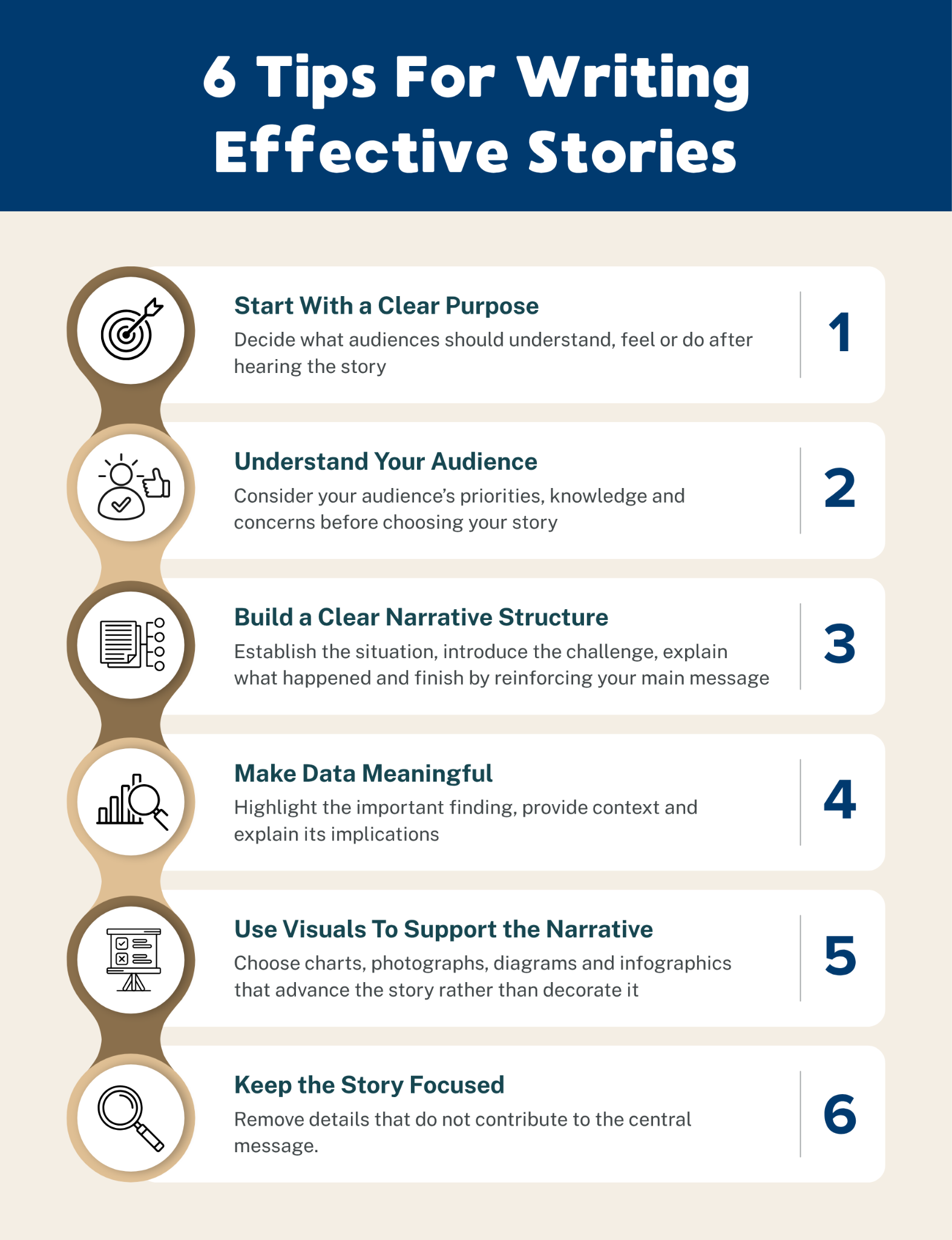
Tip 1: Start With a Clear Purpose
Decide what audiences should understand, feel or do after hearing the story. A sales presentation might demonstrate value, while an internal presentation could explain why organisational change is necessary.
Professionals looking to strengthen this process can explore Business Storytelling Studio, which focuses on developing stories for business communication.
Tip 2: Understand Your Audience
Consider your audience’s priorities, knowledge and concerns before choosing your story. A senior management presentation may emphasise business outcomes, while customers may respond better to relatable problems and practical benefits.
Tip 3: Build a Clear Narrative Structure
Give the story a beginning, development and resolution. Establish the situation, introduce the central challenge, explain what happened and finish with an outcome that reinforces your main message.
Foundations Of Brand Storytelling can help learners explore how structured narratives can communicate brand ideas, while Business Presentation with Storytelling and Infographics combines storytelling with effective presentation techniques.
Tip 4: Make Data Meaningful
Do not expect audiences to interpret numbers themselves. Highlight the important finding, provide context and explain its implications so that data supports a clear argument or recommendation.
Courses such as Communicating Data with Impact: Data Storytelling and Visualisation and (SCTP) Advanced Certificate in Data Communications and Visualisation for Business Analyst can help professionals strengthen these capabilities.
Tip 5: Use Visuals To Support the Narrative
Choose charts, photographs, diagrams and infographics that advance the story rather than decorate it. Each visual should help audiences understand information, identify patterns or visualise an important moment.
For professionals working extensively with business data, Visual Narrative Using Tableau explores ways to transform information into compelling visual narratives.
Tip 6: Keep the Story Focused
Remove details that do not contribute to the central message. A strong story does not need to be long. It needs enough context, tension and resolution to make its purpose clear.
Common Mistakes To Avoid in Storytelling
Even a promising story can lose its impact when it lacks direction or relevance. Avoiding several common mistakes can help keep business storytelling clear, credible and engaging.
- Including too much information: Excessive background or unnecessary details can bury the main message, so retain only information that moves the narrative forward.
- Forgetting the audience: A story that matters to the speaker may not matter to listeners, so frame it around their priorities, challenges or interests.
- Having no clear message: Decide what audiences should remember before writing the story, then ensure every major element supports that takeaway.
- Using data without context: Avoid filling presentations with numbers and charts without explaining what the information reveals, why it matters and what audiences should conclude.
- Forcing emotion: Exaggerated drama can undermine credibility. Use genuine experiences, relevant details and appropriate emotion instead of manufacturing conflict simply to make a story more exciting.
Make Storytelling a Skill That Moves People
Storytelling can help professionals transform information into messages that people understand, remember and act upon. From building brands and presenting data to influencing stakeholders and communicating ideas, its applications extend across industries and roles. As communication becomes increasingly digital and information-rich, knowing how to create focused, audience-centred narratives can make ideas easier to grasp and harder to forget.
Explore storytelling courses at SMU Academy to develop practical techniques for communicating ideas, data and experiences with greater impact.






FAQs About Storytelling
A good business story has a clear purpose, relatable context, meaningful challenge and logical resolution. It remains focused on the audience while supporting its message with relevant details or evidence.
Story writing usually refers to creating written narratives, while storytelling is broader. Stories can be communicated verbally, visually, digitally or through data across presentations, campaigns, reports, videos and other formats.
Storytelling involves skills that can be practised, including audience analysis, narrative structure, presentation, visual communication and editing. Regular practice and feedback can help professionals become more confident storytellers.
Marketers use storytelling to communicate brand purpose, demonstrate customer problems and solutions, explain product value and create memorable campaigns. It can be applied across advertising, social media, email, video and content marketing.