



Problems are an inevitable part of working life, from resolving customer concerns and improving inefficient processes to responding to unexpected changes. Problem solving is the process of understanding these challenges, identifying their causes and developing practical solutions that lead to better outcomes.
Strong problem-solving abilities are increasingly valuable as workplaces become more complex and technology changes how work is performed. In Singapore, ManpowerGroup’s Q3 2026 Employment Outlook Survey found that 66% of employers were willing to pay a premium for critical thinking and problem-solving skills, highlighting the value placed on employees who can navigate challenges effectively.
Developing these abilities can help you approach uncertainty with greater confidence, make sound judgements and contribute useful ideas at work. This guide explores essential problem-solving skills, a five-step approach to solving problems, useful tools, ways to strengthen your abilities and tips for demonstrating them on your resume.
What Are Problem Solving Skills?
Problem solving skills are the abilities that help you identify a problem, understand why it is happening and determine an appropriate course of action. They involve examining available information, considering different perspectives, generating possible solutions and assessing which approach is most likely to achieve the desired outcome.
These abilities combine cognitive and interpersonal capabilities. Some problems require analytical thinking, while others depend on collaboration, creativity or sound judgement. For this reason, problem solving is among the transferable skills that can be applied across roles and industries, rather than being limited to a particular profession.
While technical skills can provide the specialised knowledge needed to address particular challenges, problem solving helps you decide how and when that knowledge should be applied. It also complements other soft skills that support effective workplace performance.
11 Problem Solving Skills To Develop
Effective problem solving draws on several abilities rather than a single skill. Strengthening the following capabilities can help you understand challenges more clearly and develop solutions that work in real workplace situations.
1. Active Listening
Active listening means giving close attention to what others say and seeking clarification where necessary. It can uncover concerns or information that may change how you understand a problem.
2. Adaptability
Not every solution works as expected. Adaptability allows you to respond constructively when circumstances change, revise your approach and continue making progress rather than remaining committed to an ineffective plan.
Strengthen your ability to navigate change with SMU Academy’s Adaptability In the Face of Disruptive Change: Practice Beyond the Theory and Cultivating Emotional Intelligence Across Evolving Contexts courses.
3. Analytical Thinking
Analytical thinking helps you break complex problems into smaller parts, examine relevant information and identify connections. At work, this can reveal underlying issues that might otherwise be overlooked.
4. Collaboration
Some problems require knowledge from several functions. Collaboration allows colleagues to combine different perspectives and expertise, creating solutions that may be more practical and comprehensive than individual efforts.
Learn to work through complex challenges with others through SMU Academy’s Fostering High-Performance Interdisciplinary Collaborations course.
5. Communication
Clear communication allows you to explain problems, gather useful information and present solutions effectively. It also reduces misunderstandings when several colleagues or departments must work together to resolve an issue.
Build stronger workplace communication with SMU Academy’s Advanced Communication Strategies: Using Strategic Persuasion To Get What You Want and Purpose Driven High Performance Organisation: Leadership Communication with Presence, Passion and Purpose.
6. Creativity
Creativity helps you explore possibilities beyond familiar approaches. For example, a team facing declining engagement might redesign a service rather than simply increasing promotions or repeating previous campaigns.
Develop fresh approaches to workplace challenges with SMU Academy’s The Chief Innovation Officer Programme: Designing and Leading Innovative Organisations, Facilitating Innovation and Leading Change, and Architecting Business Model Design with Artificial Intelligence Innovation course.
7. Critical Thinking
Critical thinking involves questioning assumptions and evaluating information before reaching conclusions. It helps you distinguish reliable evidence from unsupported claims and avoid implementing solutions based on incomplete reasoning.
Sharpen your reasoning and problem-solving abilities with SMU Academy courses such as Thinking Dynamically for Strategic Decision-Making, Analytics for Management Decisions and Optimising Business Results through Performance Intelligence.
8. Decision Making
Decision making involves comparing possible solutions and selecting an appropriate course of action. Considering potential benefits, risks and constraints can help you make choices that support organisational priorities.
Strengthen your ability to evaluate options and make informed choices with SMU Academy courses such as Thinking Dynamically for Strategic Decision-Making and Analytics for Management Decisions.
9. Emotional Intelligence
Emotional intelligence helps you recognise and manage emotions while understanding how others may respond. This can be especially valuable when resolving disagreements, handling pressure or practising negotiation.
10. Research Skills
Research skills help you gather credible information before acting. Reviewing data, speaking with relevant people and examining previous solutions can provide evidence for choosing a more informed course of action.
11. Strategic Thinking
Strategic thinking encourages you to consider the wider consequences of a solution. Instead of addressing only an immediate issue, you examine how decisions could affect future priorities and stakeholder management.
Develop a broader, forward-looking approach to solving business challenges with SMU Academy’s Strategic Thinking and Business Acumen course.
These capabilities can support long-term career development, particularly as employers adopt skills-based hiring. They can also complement entrepreneurial skills, since professionals and business owners frequently need to recognise challenges and develop workable responses.
5 Step Process To Problem Solving
A structured problem-solving process can prevent you from jumping to conclusions or addressing symptoms rather than causes. These five steps provide a practical framework for moving from problem identification to improvement.
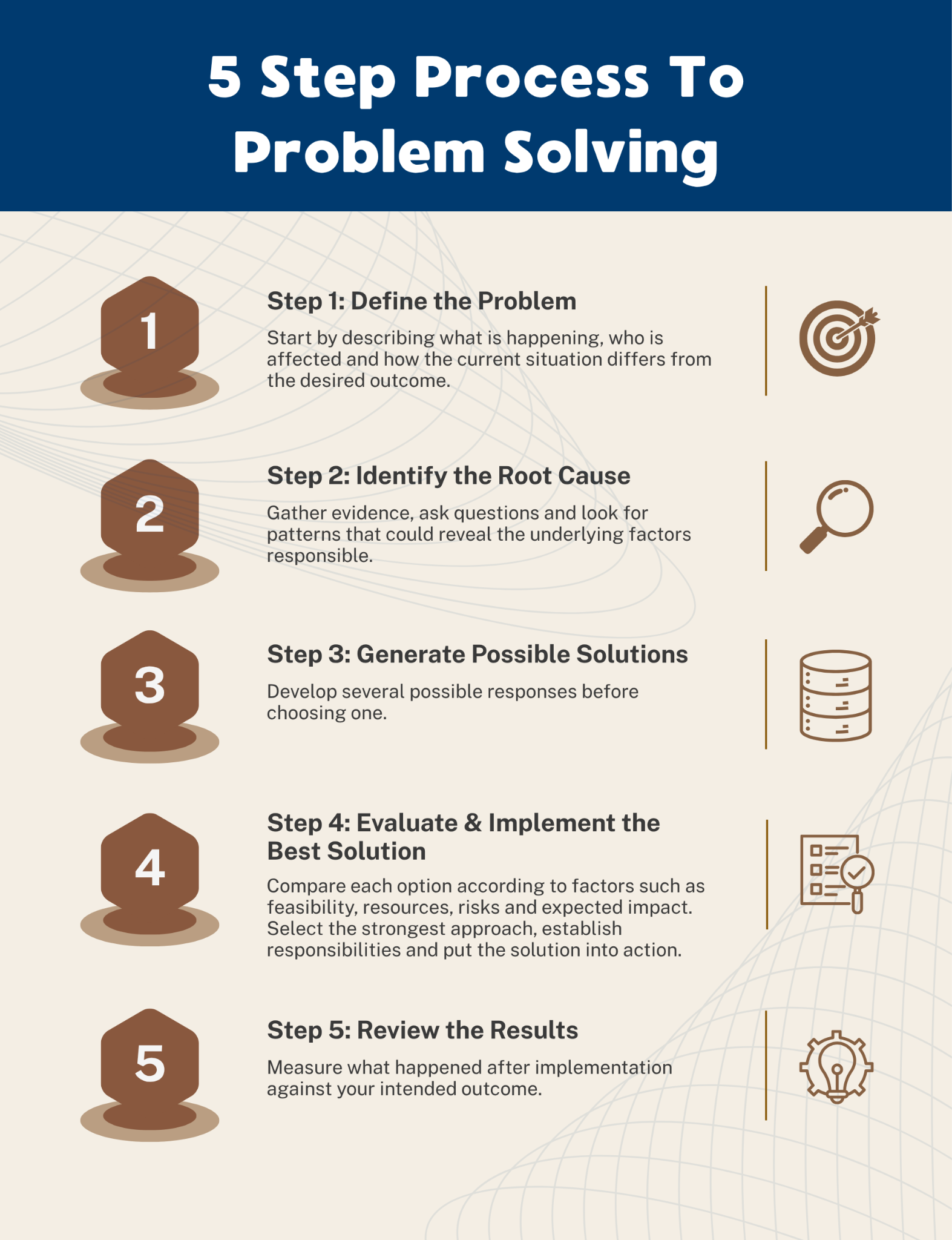
Step 1: Define the Problem
Start by describing what is happening, who is affected and how the current situation differs from the desired outcome. A specific problem statement gives your investigation a clear direction.
Step 2: Identify the Root Cause
Investigate why the problem is occurring instead of immediately treating its symptoms. Gather evidence, ask questions and look for patterns that could reveal the underlying factors responsible.
Step 3: Generate Possible Solutions
Develop several possible responses before choosing one. Exploring alternatives encourages creative thinking and reduces the risk of selecting the first available idea without considering potentially stronger approaches.
Step 4: Evaluate and Implement the Best Solution
Compare each option according to factors such as feasibility, resources, risks and expected impact. Select the strongest approach, establish responsibilities and put the solution into action.
Step 5: Review the Results
Measure what happened after implementation against your intended outcome. If the problem remains unresolved, use what you have learnt to adjust the solution or reconsider your original assumptions.
Following a consistent process can be useful across many contexts, from improving customer experience management to resolving operational challenges within an online business.
How To Develop Problem-Solving Skills
Problem-solving ability can improve through deliberate practice and exposure to different challenges. The following methods can help you become more confident at analysing situations, generating solutions and learning from outcomes.
Learn From Other Perspectives
Discuss challenging situations with colleagues from different functions or experience levels. Observing how others approach problems exposes you to alternative methods and helps reduce blind spots in your thinking.
Different leadership styles, for instance, may lead managers to approach the same workplace challenge differently. Understanding these perspectives can broaden the range of solutions you consider.
Practise Asking Better Questions
Instead of immediately asking how to fix something, investigate why it happened, who it affects and what evidence is available. Better questions can reveal causes that are not immediately obvious.
Reflect on Previous Problems
After resolving a challenge, consider what worked, what did not and what you would change next time. Reflection turns everyday workplace experiences into lessons that can improve future decisions.
Solve Problems Outside Your Usual Responsibilities
Volunteer for unfamiliar projects or challenges that require you to learn something new. Exposure to different situations encourages you to experiment with approaches rather than relying solely on established routines.
Take Relevant Courses
Structured courses can introduce frameworks, case studies and practical exercises for strengthening your abilities. Learning alongside others also provides opportunities to apply problem-solving techniques to realistic workplace scenarios.
Continuous learning may be particularly valuable when preparing for in-demand jobs, exploring some of the highest paying jobs or navigating career uncertainty following retrenchment.





Build Your Skills Progressively Through Stackable Learning Pathways
Developing problem-solving skills takes time and practice. SMU Academy’s stackable learning pathways allow learners to build their capabilities progressively through individual bite-sized modules, which may contribute towards selected larger qualifications, subject to the relevant programme requirements.
Whether you want to strengthen your critical thinking, decision-making, creativity or collaboration skills, you can start with modules that address your immediate learning needs and explore further learning opportunities as your career develops.
Explore SMU Academy’s stackable learning pathways to find programmes that support your professional development.




What Are Some Problem Solving Tools?
Problem-solving tools are structured techniques that help you organise information, investigate causes and evaluate possible solutions. Rather than relying entirely on intuition, they provide a systematic way to examine a challenge.
5 Whys
The 5 Whys involves repeatedly asking why a problem occurred until you reach its underlying cause. It is particularly useful when an obvious symptom may be masking a deeper issue.
Fishbone Diagram
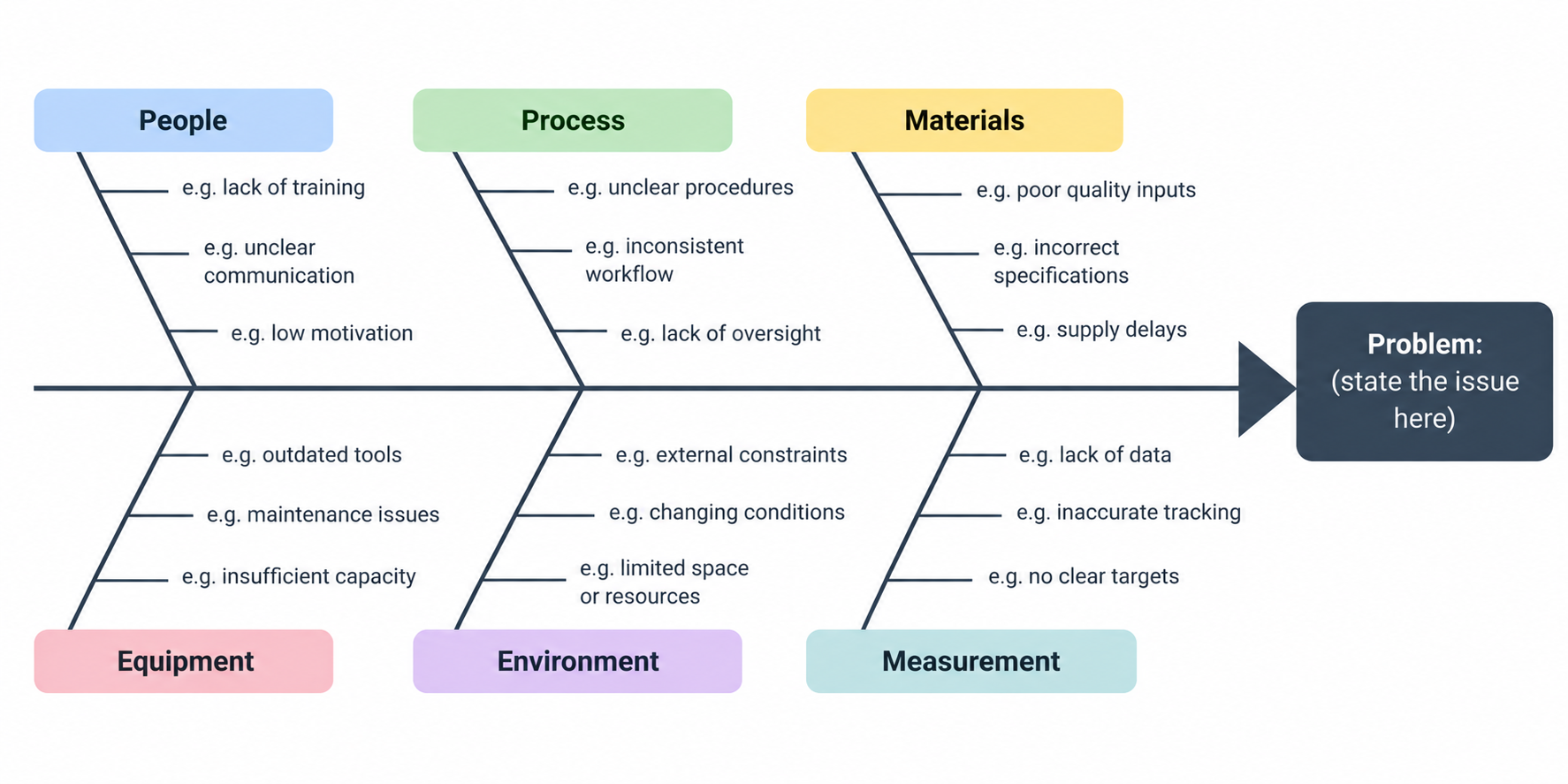
A fishbone diagram organises potential causes into categories, helping teams explore why a problem occurs. It is useful for complex issues where several factors may be contributing simultaneously.
SWOT Analysis
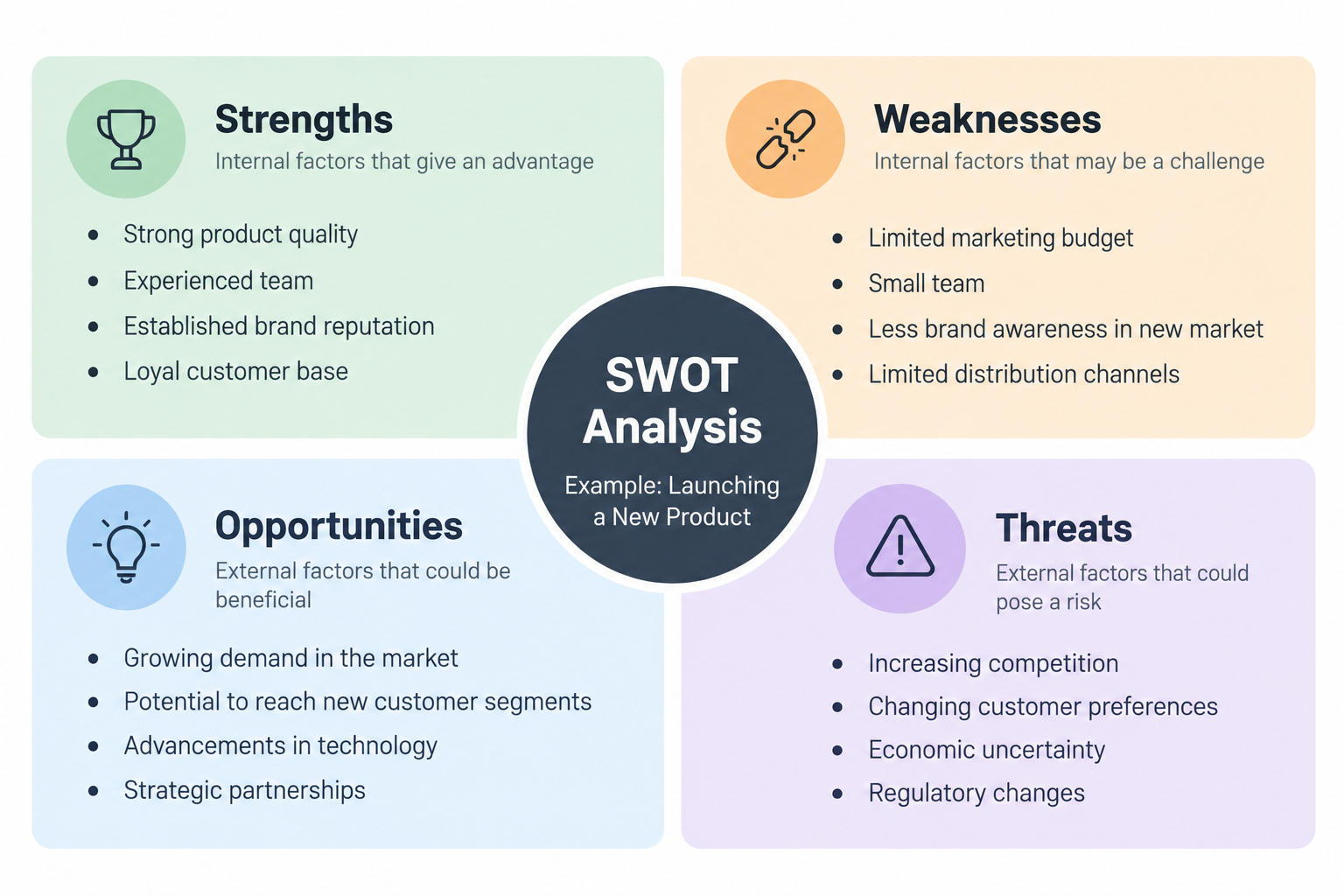
A SWOT analysis examines strengths, weaknesses, opportunities and threats surrounding a situation. Comparing these factors can help you understand your position and evaluate possible responses before making a decision.
How To Showcase Problem Solving Skills in Your Resume
Employers need evidence of what you can achieve, rather than a simple claim that you are a good problem solver. Your resume should therefore demonstrate how you addressed challenges and created measurable results.
Include Achievements, Not Just Responsibilities
Describe a problem you addressed and the improvement that followed. For example: “Redesigned the customer enquiry process, reducing average response time by 25% while maintaining service quality.”
Quantify Your Impact
Numbers make your contribution easier to understand. For example: “Identified recurring inventory discrepancies and introduced a new checking process that reduced monthly reporting errors by 30%.”
Use Strong Action Verbs
Begin statements with verbs such as analysed, resolved, improved, redesigned or streamlined. For example: “Analysed customer feedback and redesigned onboarding materials to reduce recurring support enquiries.”
Tailor Examples to the Role
Review the job description and highlight problem-solving experiences relevant to its requirements. For example: “Resolved recurring scheduling conflicts by developing a shared workflow that improved cross-team coordination.”
Showing concrete examples is especially useful when moving between industries because employers can see how your abilities may transfer to a new environment.
Build Stronger Problem Solving Skills for the Workplace
Problem solving skills can help you turn workplace challenges into opportunities to learn, improve and create value. By developing your ability to analyse information, explore different perspectives and evaluate solutions, you can approach unfamiliar situations with greater confidence.
These capabilities remain useful throughout your career, from managing everyday challenges to taking on more complex responsibilities. They can also help you contribute ideas that improve processes, teamwork and business outcomes.
Explore courses at SMU Academy to strengthen your problem solving skills and build capabilities that can support your next career step.
FAQs About Problem Solving Skills
Problem solving focuses on identifying and understanding a challenge before developing possible solutions. Decision making involves evaluating available options and selecting which action to take. Decision making is therefore often one stage within the broader problem-solving process.
They help employees respond to challenges without relying entirely on predetermined instructions. Strong problem solvers can identify causes, assess alternatives and recommend practical actions that support better workplace outcomes.
Yes. Problem solving can be strengthened through practice, reflection, structured frameworks, feedback and exposure to unfamiliar challenges. Courses and workplace projects can also provide opportunities to practise these abilities systematically.
Start by slowing down before proposing solutions. Clearly define each problem, gather relevant evidence and consider several options. After implementing a solution, review the results and identify lessons for future challenges.

Hey, chat with me!